Understanding data center power consumption is essential when planning infrastructure for enterprise computing, cloud environments, high-performance computing and increasingly power-intensive AI workloads. Electrical demand affects not only operating requirements, but also cooling capacity, equipment density, power distribution, resilience and the ability of a facility to support future growth.
There is no single power profile that applies to every data center. Servers, GPUs, storage, networking equipment, cooling systems, power-conversion equipment and supporting facility infrastructure all contribute to total energy use. The amount of power required depends heavily on the equipment being deployed, how intensively it operates and how efficiently the wider facility supports it.
Crystal Peaks Data Centers approaches power planning as part of a coordinated infrastructure strategy that considers equipment density, electrical capacity, monitoring, self-contained closed loop cooling and long-term expansion. Its wider planning approach also emphasizes community partnership, quiet facility operations and infrastructure planning intended so surrounding communities do not experience increased local utility costs.
What Drives Data Center Power Consumption?
Data center power consumption is the electrical energy required to operate IT equipment and the supporting infrastructure that keeps that equipment available within appropriate operating conditions.
IT systems normally account for the largest direct computing load. Servers, processors, GPUs, memory, storage and network equipment all require electrical power, while supporting systems such as cooling, UPS equipment, electrical distribution, monitoring, security and lighting add to total facility demand.
Nearly all electrical energy used by computing equipment ultimately becomes heat within the equipment environment. This creates a close relationship between power and cooling: as compute density increases, the facility must also have an appropriate strategy for removing the resulting thermal load.
Key Sources of Data Center Power Demand
Organizations evaluating data center power requirements should look beyond the headline electrical capacity of a facility. Understanding where energy is consumed provides a clearer picture of infrastructure requirements and potential constraints.
| Power Component | Primary Function | Planning Consideration |
|---|---|---|
| IT Compute Hardware | Runs CPUs, GPUs, memory, storage and networking equipment. | Rack density, workload utilization, equipment specifications and future hardware requirements. |
| Cooling Infrastructure | Removes heat generated by computing and electrical equipment. | Cooling architecture, equipment density, monitoring, thermal conditions and future capacity. |
| UPS Systems | Conditions power and supports equipment during interruptions while backup systems respond. | Efficiency, topology, capacity, redundancy and expected load. |
| Power Distribution | Distributes electrical power from facility infrastructure to IT equipment. | Transformer efficiency, circuit capacity, voltage, phase balancing and distribution losses. |
| Facility Support Systems | Supports security, monitoring, lighting, controls and operational areas. | Baseline demand, automation and operational requirements. |
| Future Capacity | Provides room for additional infrastructure and higher-density equipment. | Utility capacity, cooling scalability, distribution pathways and long-term deployment planning. |
1. IT Equipment Load
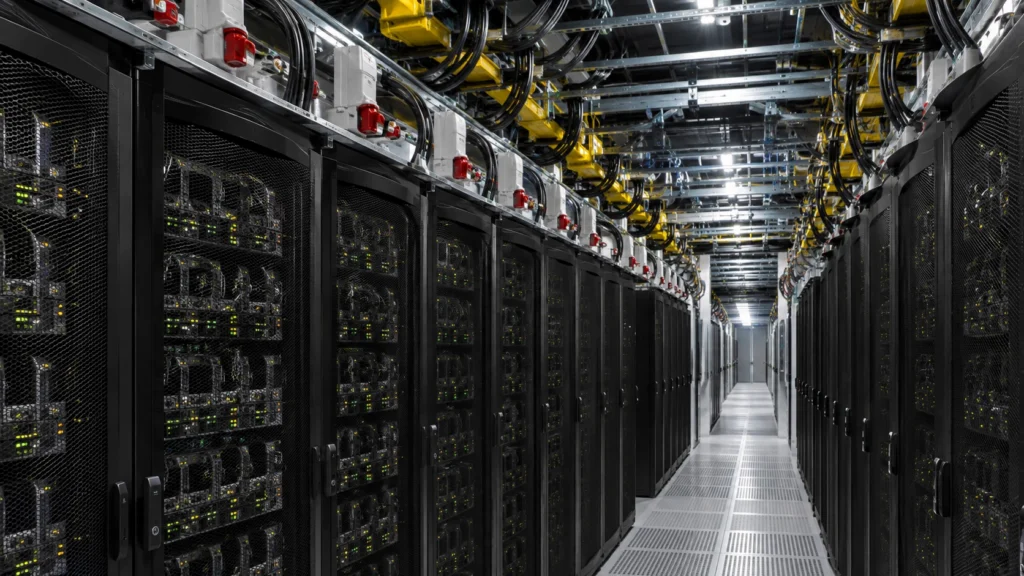
The primary direct driver of data center energy demand is the IT infrastructure itself. Servers, processors, graphics accelerators, storage arrays and network equipment require continuous electrical power while workloads are operating.
Power requirements can vary substantially between deployments. Conventional enterprise servers may create relatively moderate rack loads, while GPU-based AI systems and high-performance computing equipment can concentrate significantly more electrical demand and heat within the same physical footprint.
This makes equipment-level planning important. Organizations should understand both the expected consumption of their initial deployment and how future hardware refreshes could change rack-level power requirements.
2. Cooling and Environmental Systems
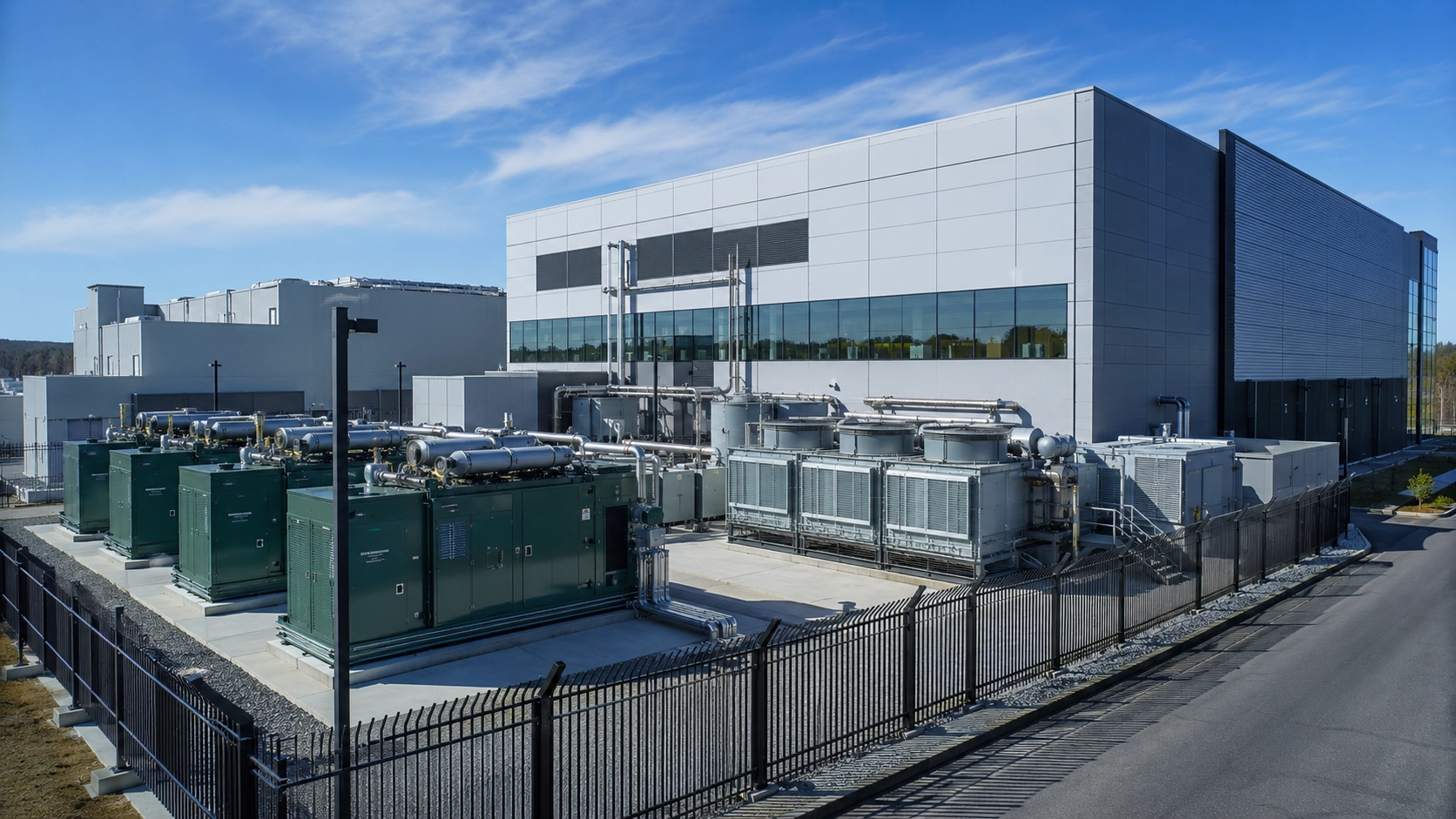
Cooling is another important component of data center power consumption. Mechanical systems require energy to move heat away from IT equipment and maintain suitable environmental conditions.
The amount of energy required for cooling depends on factors including equipment density, airflow management, cooling architecture, facility design, climate, controls and how closely cooling capacity is matched to the actual thermal load.
Poor airflow management can increase unnecessary cooling demand. If warm equipment exhaust recirculates toward server intakes or conditioned air bypasses the equipment it is intended to cool, mechanical systems may need to operate harder to maintain suitable conditions.
Organizations can review the ASHRAE guidance for data centers and telecommunications facilities for additional technical information about thermal conditions, airflow and equipment environments.
3. Power Conversion and Distribution Losses
Electrical energy typically passes through several stages before reaching IT equipment. Depending on the facility architecture, this can include transformers, switchgear, UPS systems, distribution equipment and rack-level power systems.
Each stage introduces some electrical loss, generally released as heat. Efficient equipment, appropriate loading and well-planned distribution can help reduce unnecessary overhead while maintaining the resilience required by the facility.
Understanding Power Usage Effectiveness
Power Usage Effectiveness, commonly known as PUE, is a widely used metric for examining data center energy efficiency. It compares the total energy used by a facility with the energy delivered specifically to IT equipment.
A PUE closer to 1.0 indicates that a greater proportion of total facility energy is reaching IT equipment rather than being consumed by supporting infrastructure. However, PUE should be interpreted in context because facility design, climate, operating load, equipment density and measurement boundaries can all influence the result.
The U.S. Department of Energy provides additional guidance through its Best Practices Guide for Energy-Efficient Data Center Design.
How to Plan for Long-Term Data Center Power Capacity
Effective power planning should consider both current deployment requirements and credible future growth. Designing only around an initial group of servers can create constraints when equipment density, workload requirements or infrastructure footprints change.
One useful starting point is comparing equipment nameplate ratings with expected operating load. Equipment does not necessarily operate continuously at its maximum rated consumption, so engineering decisions should be based on realistic workload expectations while still allowing appropriate capacity margins.
Organizations should also examine how electrical capacity can scale. Future server generations, GPU infrastructure, additional storage, private cloud deployments and high-performance computing workloads may increase both rack-level power requirements and total facility demand.
Crystal Peaks considers these relationships through its data center infrastructure planning approach, where power, cooling, equipment density, connectivity and future expansion are treated as connected infrastructure requirements.
Integrating Power With Self-Contained Closed Loop Cooling
Power supply and thermal management should not be planned independently. Increasing compute density typically increases heat output, which means additional electrical capacity must be coordinated with the facility’s ability to remove that heat.
Crystal Peaks incorporates self-contained closed loop cooling into its wider infrastructure-planning approach. This provides a defined cooling strategy that can be considered alongside equipment layout, electrical capacity, monitoring, maintenance access and future infrastructure requirements.
The exact cooling configuration required will depend on the planned facility, equipment and workload. Closed loop cooling should therefore form part of a coordinated engineering assessment rather than being treated as a stand-alone guarantee of energy efficiency or infrastructure performance.
Learn more about Crystal Peaks’ data center cooling infrastructure planning and how thermal requirements are considered alongside broader facility design.
Planning for High-Density and AI Infrastructure
AI and high-performance computing are increasing the amount of electrical power that can be concentrated within individual racks and data halls. GPU-based environments can therefore require a different infrastructure approach from conventional enterprise computing.
Facilities planning for these workloads should consider rack-level electrical capacity, distribution architecture, thermal management, monitoring and how additional infrastructure could be deployed over time.
The objective should not simply be to provide a large headline power capacity. The electrical and cooling environment needs to support the equipment where it will actually be installed.
Monitoring Data Center Power Consumption
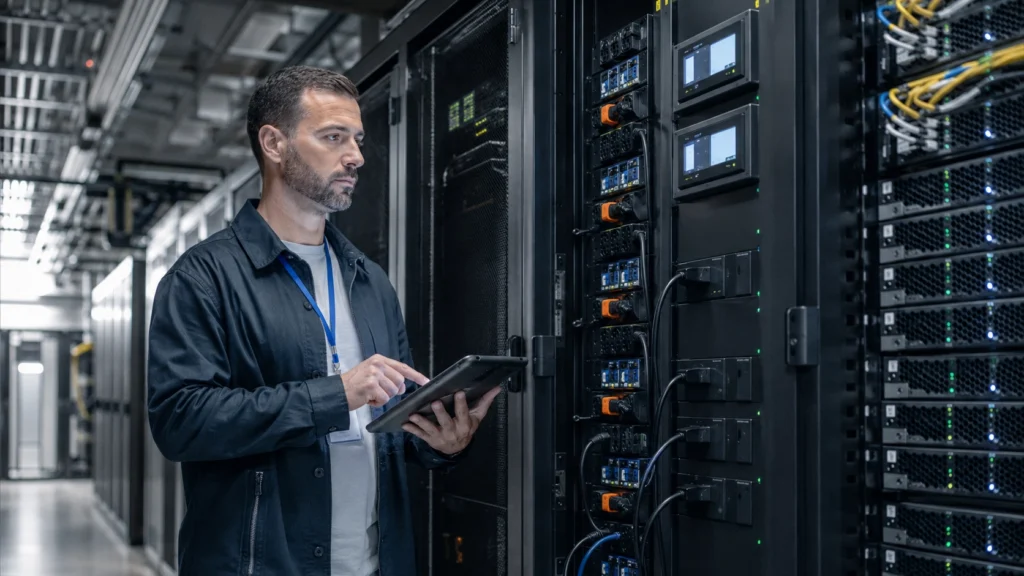
Monitoring provides visibility into how electrical capacity is being used across the facility. Depending on the infrastructure design, monitoring may include facility-level consumption, distribution-system loading, UPS performance, rack-level demand and environmental conditions.
Accurate monitoring can help operations teams identify unusual demand, understand available capacity and compare actual infrastructure use with planned requirements.
Monitoring also becomes increasingly valuable as infrastructure density increases. A facility may have sufficient overall electrical capacity while individual distribution paths or racks approach practical operating limits.
Community Partnership and Responsible Power Planning
Data center power planning also needs to consider how infrastructure development interacts with the surrounding community. Utility requirements, facility design, cooling equipment, construction activity and long-term operations can all become important considerations for nearby residents, businesses and other organizations.
Crystal Peaks emphasizes community partnership as part of its infrastructure-planning approach. This means considering local conditions and surrounding stakeholders alongside technical requirements as facilities are planned and developed.
The company also plans for quiet facility operations. Mechanical equipment, cooling infrastructure, facility layout, access areas and operational activity can all influence acoustic conditions, so noise considerations should form part of site and infrastructure planning rather than being addressed only after development.
Crystal Peaks’ stated planning approach is also intended so that surrounding communities do not experience increased local utility costs. This should be understood specifically as part of the company’s infrastructure and utility-planning position and should not be expanded into claims about municipal rates, taxes, subsidies, individual electricity bills or unrelated utility pricing.
Building Scalable, Efficient Energy Strategies
Managing data center power consumption requires balancing computing demand with electrical capacity, cooling requirements, infrastructure resilience and future growth.
Effective planning considers the complete path from utility capacity and electrical distribution through to racks, servers and supporting cooling systems. It should also account for how equipment requirements may change as computing density increases.
Crystal Peaks Data Centers integrates power planning with self-contained closed loop cooling, equipment density, monitoring and long-term infrastructure requirements while also emphasizing community partnership, quiet facility operations and planning intended not to increase local utility costs.
Organizations evaluating future infrastructure can explore Crystal Peaks’ data center services, review its approach to scalable infrastructure planning, or learn more about data center pre-leasing opportunities. Facility status, electrical capacity, technical specifications and project requirements should be confirmed for the applicable location.
Frequently Asked Questions About Data Center Power Consumption
What is data center power consumption?
Data center power consumption is the electrical energy used to operate IT equipment and supporting infrastructure such as cooling, electrical distribution, monitoring, security and other facility systems.
What drives the most power consumption in a data center?
IT hardware is normally the primary direct electrical load, including servers, CPUs, GPUs, storage and networking equipment. Cooling and supporting electrical infrastructure also contribute to total facility energy use.
What is PUE and why is it important?
Power Usage Effectiveness compares total facility energy use with the energy delivered to IT equipment. It can help organizations understand how much additional energy is being used by cooling, electrical distribution and other facility-support systems.
How does AI affect data center power consumption?
AI infrastructure can concentrate significant electrical demand within GPU-based racks and computing clusters. This can increase requirements for electrical distribution, monitoring, cooling capacity and long-term facility planning.
How does Crystal Peaks use self-contained closed loop cooling?
Crystal Peaks incorporates self-contained closed loop cooling into its broader facility-planning approach alongside power capacity, equipment density, monitoring, maintenance access and future infrastructure requirements. The exact cooling configuration depends on the relevant site and deployment.
How does Crystal Peaks approach power planning for surrounding communities?
Crystal Peaks combines infrastructure planning with community partnership and quiet facility operations. Its stated approach is also intended so surrounding communities do not experience increased local utility costs, while project-specific utility arrangements should be confirmed for each development.