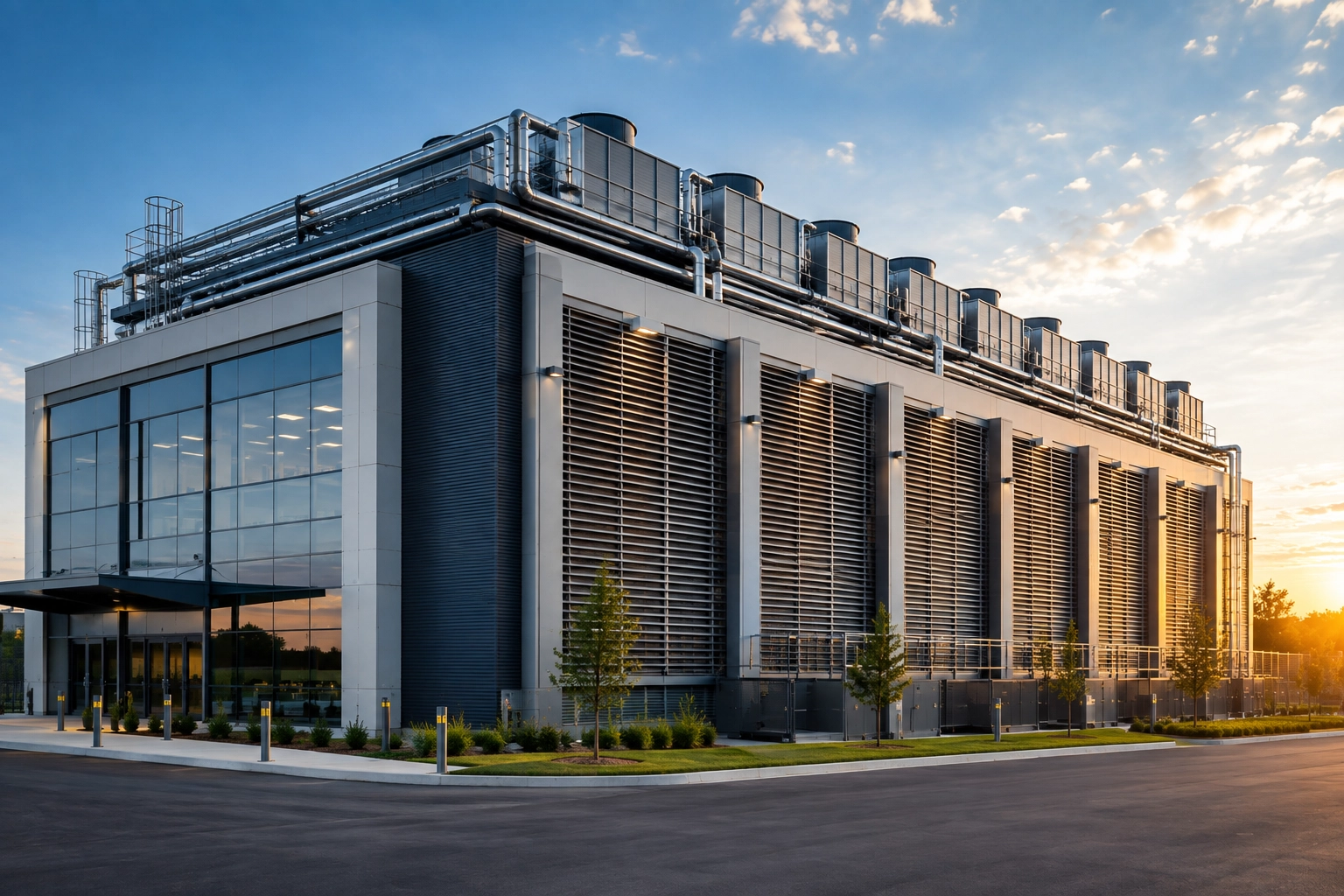
Data center cooling is one of the most important infrastructure areas to evaluate when selecting a facility for servers, storage, networking equipment or other critical digital systems. A data center can offer suitable floor space, connectivity and security, but if its cooling environment cannot reliably support the equipment being deployed, performance and future capacity may still be limited.
For organizations comparing data center facilities, the question should not simply be whether cooling is available. The more important questions are how heat is managed, how airflow is controlled, what equipment density the environment can support, how conditions are monitored, what happens during maintenance or equipment disruption, and whether the infrastructure can scale as computing requirements increase.
Crystal Peaks Data Centers approaches cooling as part of a wider infrastructure strategy that connects power, equipment layout, environmental monitoring, redundancy and long-term capacity planning. Evaluating these areas together can provide a much clearer picture of whether a facility is suited to both current workloads and future growth.
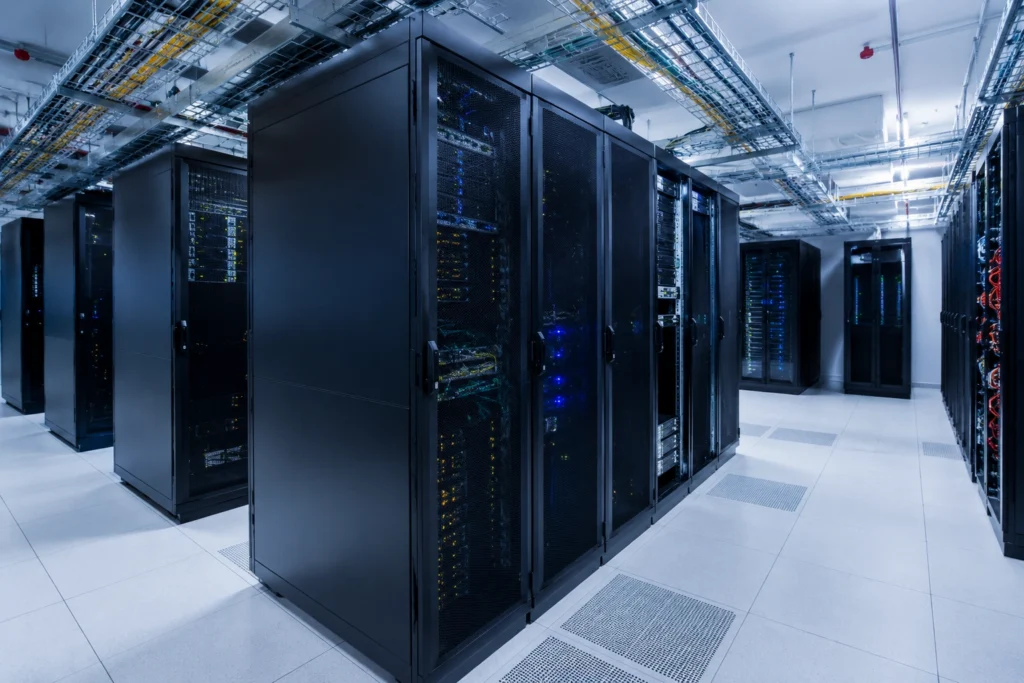
Why Data Center Cooling Matters When Choosing a Facility
Servers and other IT equipment generate heat continuously while operating. That heat has to be removed from the equipment environment so suitable operating conditions can be maintained.
Cooling therefore affects far more than room temperature. It can influence equipment stability, available rack density, future expansion potential and the resilience of the wider data center environment.
As equipment becomes more powerful, this becomes increasingly important. A facility may have enough physical space for additional servers but still face practical capacity limits if its electrical and cooling infrastructure cannot support the resulting load.
Crystal Peaks addresses these considerations through its broader data center cooling infrastructure planning, where cooling capacity, airflow, equipment layout, environmental monitoring, redundancy and future load requirements are considered together.
What Should You Evaluate in Data Center Cooling?
Cooling should be evaluated as a complete operating environment rather than as a single mechanical system. The following areas can help organizations compare facilities more effectively.
| Cooling Evaluation Area | What to Assess | Why It Matters |
|---|---|---|
| Cooling Capacity | Current thermal capacity and ability to support future equipment loads | Helps determine whether the facility can support current and expanding infrastructure. |
| Airflow Management | Supply and return airflow, rack arrangement, containment and hot-air recirculation | Helps deliver suitable conditions to equipment and reduce localized heat problems. |
| Rack Density | Expected power and heat load per rack | High-density infrastructure can create cooling requirements very different from conventional deployments. |
| Environmental Monitoring | Temperature, humidity and other relevant facility conditions | Provides visibility into the actual environment around critical equipment. |
| Redundancy | Cooling resilience during maintenance, faults or equipment disruption | Helps reduce the risk that a single cooling issue affects critical workloads. |
| Equipment Layout | Rack placement, airflow direction and maintenance access | Facility layout can significantly influence cooling effectiveness. |
| Future Scalability | Ability to add cooling capacity as IT demand increases | Reduces the risk of outgrowing the thermal capacity of the facility. |
| Power Integration | Relationship between electrical capacity and heat output | Higher electrical loads generally create additional thermal demand. |
1. Evaluate Available Cooling Capacity
One of the first questions to ask is whether the facility has enough cooling capacity for the equipment you intend to deploy.
This should not be evaluated only at building level. The useful question is whether sufficient cooling can be delivered to the actual area, row or rack where equipment will operate.
A facility designed around moderate-density enterprise hardware may face different thermal requirements when supporting high-performance servers, GPU infrastructure or other equipment with concentrated power demand.
Organizations should therefore understand their expected equipment load before selecting space. Cooling capacity should also be considered alongside future deployments rather than being sized only around the first group of servers being installed.
2. Look Closely at Airflow Management
Effective data center cooling depends heavily on controlling how air moves through the equipment environment.
Most conventional servers take air in through the front of the chassis and discharge warmer air from the rear. A well-planned facility needs to deliver appropriate supply air to equipment intakes while moving exhaust air away without allowing excessive recirculation.
ASHRAE guidance for data centers highlights the importance of separating supply and return airflow. Hot-aisle and cold-aisle arrangements, containment and appropriate rack management can help reduce unwanted mixing between cooler supply air and warmer equipment exhaust.
Organizations evaluating a facility can review the ASHRAE guidance for data centers and telecommunications facilities for additional technical context around equipment inlet conditions, airflow separation and containment.
During a facility assessment, look at how racks are positioned, how air enters and leaves the equipment area, whether unused rack spaces are properly managed and whether the design reduces obvious paths for hot exhaust air to return to equipment intakes.
3. Understand the Relationship Between Rack Density and Cooling
Not all server racks create the same thermal load. The type and quantity of equipment installed within a rack can dramatically affect both power demand and heat generation.
This makes rack density an important part of facility evaluation. An organization deploying conventional enterprise equipment may have very different cooling requirements from one deploying AI accelerators, GPUs or high-performance computing infrastructure.
ASHRAE’s current guidance for high-density computing environments notes that high-powered CPUs, GPUs and dense memory configurations can require increased cooling and, in some situations, separate environmental controls or cooling systems.
ASHRAE also discusses purpose-built cooling approaches for increasingly dense AI infrastructure in its AI Data Center Energy and Thermal Efficiency Framework.
Before committing to a facility, organizations should therefore understand both their current rack requirements and what future hardware may look like.
4. Review Environmental Monitoring
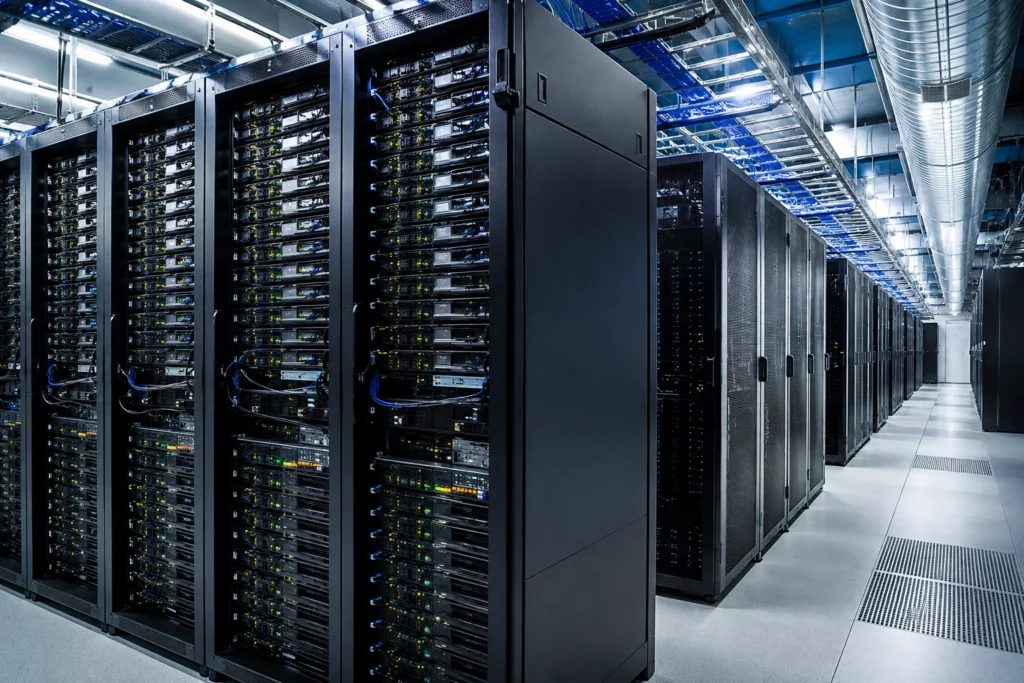
A data center operator needs visibility into the environment around critical equipment. Facility-level cooling equipment alone does not show whether every rack is receiving suitable operating conditions.
Environmental monitoring can provide information about conditions such as temperature and humidity and help facility teams identify changes before they develop into larger operational issues.
Monitoring becomes increasingly important as rack densities rise because localized conditions can vary significantly across a data hall. A room-level reading may not always reveal what individual equipment intakes are experiencing.
ASHRAE’s AI data center guidance recommends granular monitoring around rack inlets and integration with facility management or control systems for environments where precise thermal management is required.
When evaluating a facility, organizations should ask how environmental conditions are measured, where sensors are located, how alerts are managed and how operations teams respond when conditions move outside expected parameters.
5. Ask How Cooling Reliability and Redundancy Are Addressed
Cooling infrastructure requires maintenance and, like other mechanical equipment, can experience faults or interruptions. Organizations hosting critical systems should therefore understand how the facility plans for these situations.
Cooling redundancy is intended to provide resilience when part of the cooling environment is unavailable. The appropriate level of redundancy depends on the facility design, workload requirements and overall operating strategy.
A useful evaluation should go beyond asking whether a facility is “redundant.” Organizations should understand what that means within the actual cooling architecture and how maintenance can be performed while important equipment remains supported.
Crystal Peaks includes redundancy planning as part of its cooling infrastructure strategy because cooling reliability is directly connected to stable facility operations and uptime planning.
6. Review the Physical Equipment Layout
Data center layout can significantly affect thermal performance. Rack placement, airflow direction, containment, cable routing, access paths and the location of cooling equipment can all influence how effectively heat is moved away from IT systems.
This is why cooling should be considered during data center design and construction planning, not after the equipment layout has already been finalized.
The layout should also provide practical access for maintenance. Cooling infrastructure that is difficult to inspect, service or expand can create operational challenges later.
When comparing facilities, organizations should therefore consider whether rack and mechanical layouts appear structured around both airflow and operational access.
7. Evaluate Cooling and Power Together
Power and cooling are closely connected because electrical equipment produces heat while operating. As server power increases, the thermal load that needs to be removed also increases.
This can create a practical limitation in facilities where electrical capacity and cooling capacity have not been planned together.
For example, a facility might appear capable of providing additional electrical capacity to a rack, but the deployment may still be restricted if the surrounding cooling infrastructure cannot manage the corresponding increase in heat output.
Crystal Peaks connects these requirements through its data center infrastructure planning approach, which considers power, self-contained closed-loop cooling, equipment density and future loads as related infrastructure requirements.
8. Determine Whether Cooling Can Scale With Future Infrastructure
Current cooling performance is only part of the evaluation. Organizations should also determine how easily the facility can respond as infrastructure requirements change.
Future growth might include additional racks, denser server configurations, increased storage, more networking equipment, private cloud infrastructure or AI and high-performance computing workloads.
Each of these changes can increase thermal demand.
A scalable facility should have a realistic strategy for expanding cooling alongside IT capacity. That does not necessarily mean installing all future cooling infrastructure immediately. It means that the physical layout, mechanical planning and overall facility strategy should provide a practical path for growth.
This is particularly important when evaluating enterprise colocation data center sites, where organizations may expect their infrastructure footprint to change substantially over the life of the deployment.
9. Understand How the Facility Handles Higher-Density Workloads
AI, machine learning and other compute-intensive workloads are changing the amount of power and cooling that can be required within a relatively small physical footprint.
Even if an organization does not require high-density infrastructure today, it can be useful to understand whether the facility has considered how future workload profiles may change.
The evaluation should focus on capability rather than terminology. Ask how higher rack densities are accommodated, how thermal conditions are monitored, whether cooling infrastructure can be expanded and how the facility coordinates increasing power demand with heat removal.
This gives organizations a clearer view of whether the environment is prepared for evolving infrastructure requirements rather than simply optimized for today’s equipment.
10. Consider Operational and Community Factors
Cooling systems operate as part of a larger facility and can affect more than the IT environment. Mechanical infrastructure, facility design, noise and utility planning can also influence the way a data center interacts with the surrounding area.
Crystal Peaks emphasizes community partnership, quiet facility operations and responsible community-focused planning alongside technical infrastructure performance. Its cooling approach forms part of a wider strategy intended to support dependable data center operations while considering surrounding communities, with infrastructure planning intended so that local utility costs are not increased.
For organizations evaluating a long-term infrastructure partner, this broader operating approach can be worth considering alongside technical specifications.
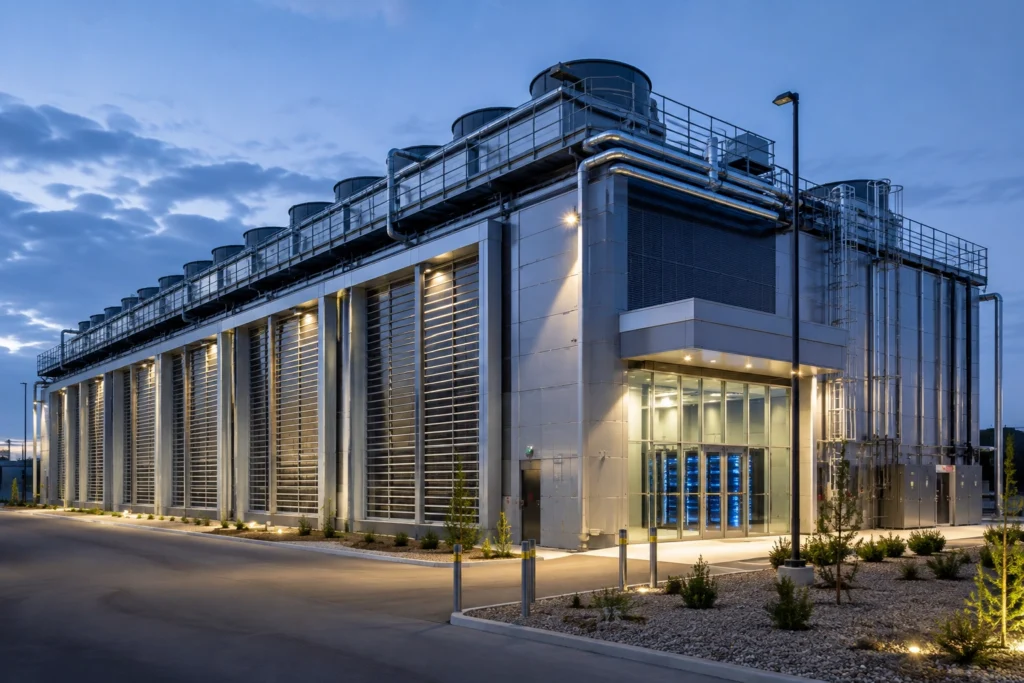
Questions to Ask About Data Center Cooling Before Signing
A facility evaluation should produce practical answers rather than broad claims about cooling capability. Before choosing a data center, organizations should consider asking:
- What cooling capacity is available for our planned equipment?
- What rack densities can the proposed environment support?
- How are cooler supply air and warmer equipment exhaust managed?
- How are temperature and environmental conditions monitored?
- How is cooling redundancy handled during maintenance or equipment failure?
- Can cooling capacity expand as our IT load grows?
- How are power capacity and cooling capacity planned together?
- How would the facility accommodate future higher-density equipment?
The answers should be considered against the actual infrastructure being deployed. A general assurance that a facility has “sufficient cooling” is less useful than understanding how capacity, airflow, monitoring and future growth align with the organization’s equipment requirements.
Warning Signs When Evaluating Data Center Cooling
Organizations should investigate further when a facility cannot clearly explain how cooling requirements are connected to rack density, power demand and future capacity.
Other concerns can include limited environmental visibility, unclear redundancy planning, significant hot-air recirculation, poor rack organization or an infrastructure plan that provides little room for expansion.
The objective is not to look for one specific cooling technology. Different facilities can use different architectures successfully. What matters is whether the complete thermal environment has been designed around the workloads it needs to support.
Why Cooling Should Be Part of the Wider Facility Evaluation
A data center should not be selected on cooling performance alone. Power, connectivity, security, compliance, location, operational access and scalability also matter.
However, these infrastructure layers are interconnected. Higher equipment density affects power and cooling. Facility layout affects cooling and maintenance access. Expansion can affect electrical capacity, thermal demand and connectivity requirements.
This is why Crystal Peaks approaches facility development as a coordinated infrastructure process rather than treating individual systems independently. Its data center services bring together infrastructure planning, cooling, connectivity, compliance and colocation readiness around longer-term operational requirements.
Evaluating Data Center Cooling for Long-Term Performance
Choosing a data center facility is a long-term infrastructure decision, and data center cooling should be evaluated with the same attention as power, connectivity and security.
The evaluation should consider cooling capacity, airflow, environmental monitoring, rack density, equipment layout, redundancy and the relationship between cooling and electrical demand. It should also look beyond today’s deployment and determine whether the facility can respond as equipment density and computing requirements increase.
Crystal Peaks Data Centers incorporates self-contained closed-loop cooling into its wider facility planning approach, alongside power, monitoring, equipment layout, redundancy and long-term capacity requirements. The objective is to create controlled, scalable data center environments prepared for both current infrastructure and future growth.
Learn more about Crystal Peaks’ cooling infrastructure approach, explore infrastructure planning for scalable growth, or review its approach to enterprise colocation data centers.
Frequently Asked Questions About Data Center Cooling
What should I evaluate in data center cooling?
Evaluate cooling capacity, airflow management, rack density, equipment layout, environmental monitoring, redundancy and future scalability. Cooling should also be reviewed alongside the facility’s available electrical capacity because higher-powered equipment generally produces more heat.
Why is airflow important in data center cooling?
Airflow helps deliver suitable supply air to equipment while moving warmer exhaust air away. Poor airflow management can allow warm exhaust to recirculate toward server intakes or allow supply air to bypass the equipment it is intended to cool.
How does rack density affect data center cooling?
Higher-density racks can concentrate more electrical power and heat within a smaller physical area. This can require greater cooling capacity, more precise airflow management or cooling infrastructure designed specifically for higher-density equipment.
Why is environmental monitoring important in a data center?
Environmental monitoring provides visibility into operating conditions around critical infrastructure. Monitoring temperature, humidity and other relevant conditions can help facility teams identify changes and respond before they develop into more significant thermal issues.
What is cooling redundancy in a data center?
Cooling redundancy is the planning used to maintain suitable facility conditions when cooling equipment requires maintenance or experiences disruption. The appropriate redundancy strategy depends on the facility architecture and workload requirements.
How should I evaluate cooling for future data center growth?
Consider how future servers, additional racks, higher power density and more demanding workloads could change thermal requirements. A scalable facility should have a practical strategy for expanding cooling capacity as IT infrastructure grows.