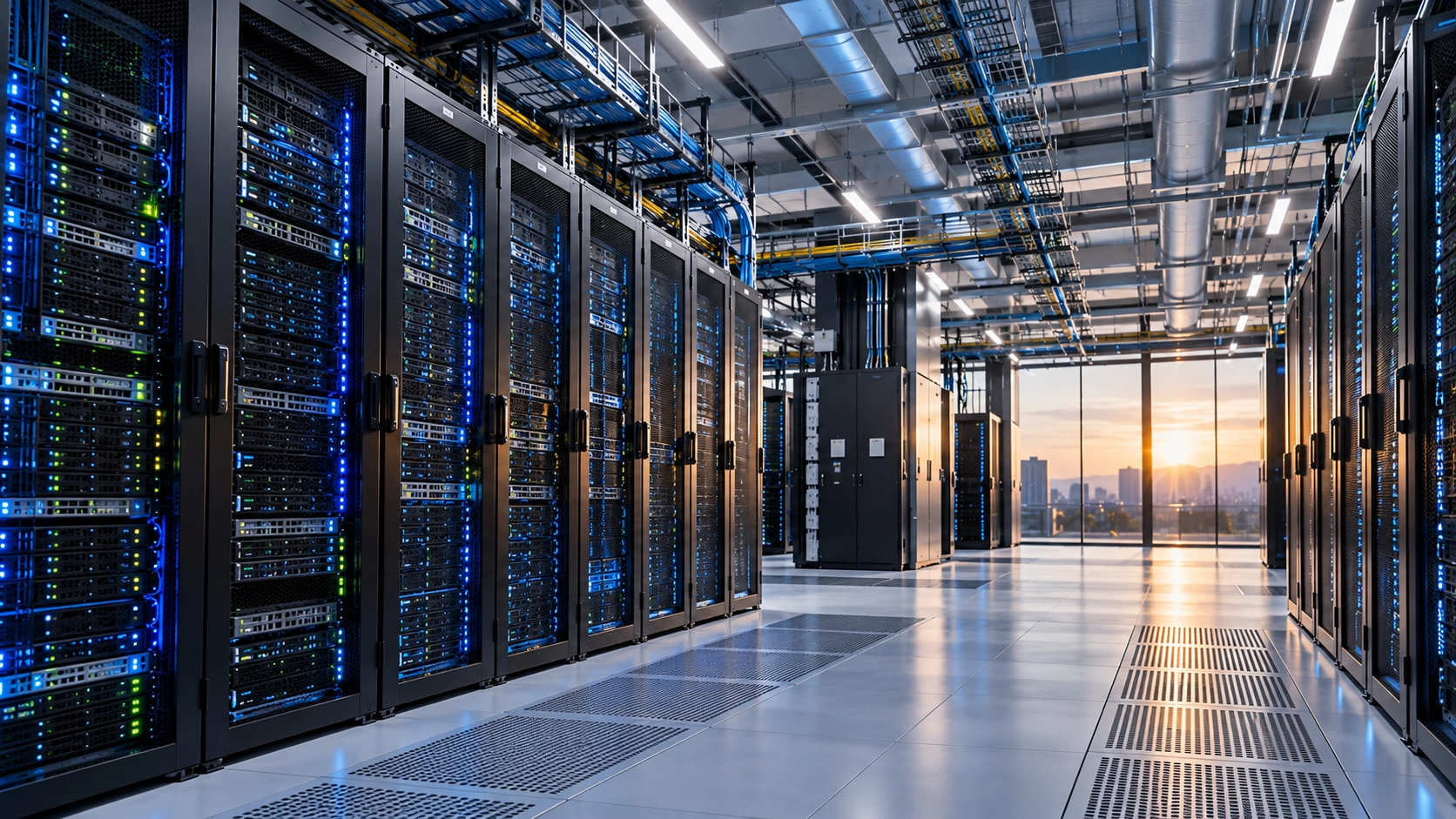
Data center capacity planning is the process of understanding how much infrastructure a facility can support today and how those requirements may change as workloads, equipment and business needs grow. Effective planning considers more than available floor space. Power, cooling, rack density, connectivity and physical infrastructure all influence the practical capacity of a data center.
A facility may appear to have substantial room for additional equipment while still approaching limits in electrical or cooling capacity. Similarly, replacing older servers with higher-density systems can increase infrastructure demand without increasing the number of racks being used.
Capacity planning therefore connects current utilization with future requirements. Organizations need to understand what resources are available, what their infrastructure actually consumes and how new equipment or workloads could change those requirements over time.
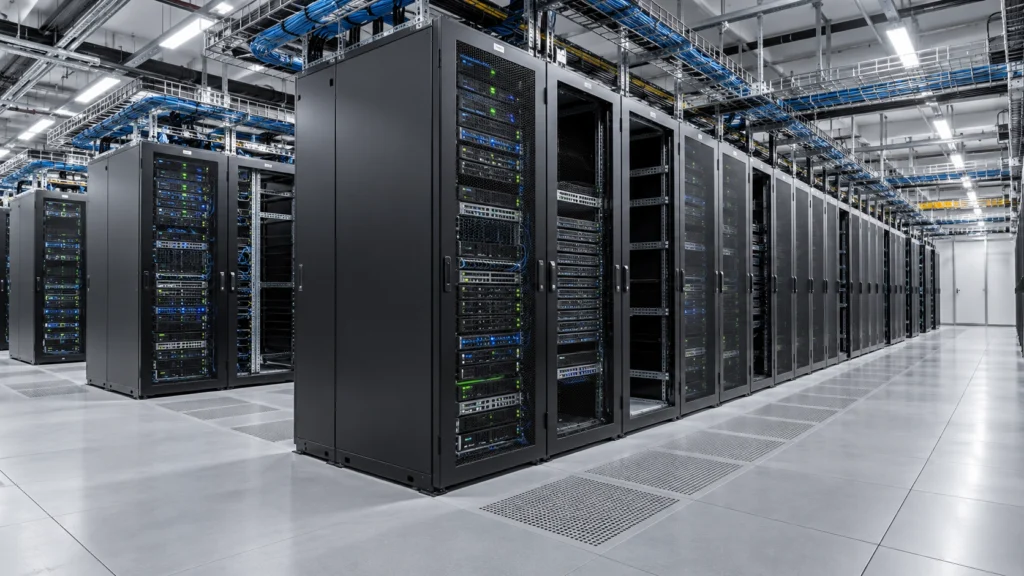
Crystal Peaks Data Centers incorporates capacity considerations into its wider data center infrastructure planning approach, where power, cooling, equipment density and future load requirements are evaluated as connected infrastructure factors.
What Is Data Center Capacity Planning?
Data center capacity planning evaluates the resources required to support IT infrastructure and compares those requirements with the resources available within the facility.
The process can include electrical power, cooling capacity, rack space, equipment density, network connectivity and supporting mechanical infrastructure. These areas should be considered together because a limitation in one can restrict the usable capacity of the others.
For example, a data hall may have physical space for additional racks but insufficient cooling capacity for the proposed equipment. Another environment may have sufficient cooling but limited electrical capacity at the rack or distribution level.
The objective is not simply to maximize utilization. Capacity planning helps organizations understand when resources may become constrained and provides time to plan expansion, upgrades or infrastructure changes before those limits interfere with operations.
Why Data Center Capacity Planning Matters
IT infrastructure changes continuously. New applications are introduced, storage requirements increase, equipment is replaced and organizations adopt workloads with different power and cooling requirements.
Without capacity planning, infrastructure growth can become reactive. Teams may only discover a limitation when they are ready to deploy new equipment and find that sufficient power, cooling or rack capacity is not available where it is needed.
Planning ahead provides greater visibility into these constraints. It can help organizations identify when additional capacity may be required, where infrastructure resources are being consumed and whether the facility has a realistic path for future expansion.
Core Areas of Data Center Capacity Planning
Capacity should be evaluated across multiple infrastructure layers. Looking at only one measurement can create an incomplete picture of what the facility can realistically support.
| Capacity Area | What to Evaluate | Why It Matters |
|---|---|---|
| Power | Available electrical capacity, distribution and equipment demand | Determines whether additional IT equipment can be powered reliably. |
| Cooling | Thermal capacity, airflow and expected heat loads | Equipment expansion increases the amount of heat the facility must manage. |
| Rack Space | Available racks, rack units and equipment footprint | Establishes the physical space available for additional infrastructure. |
| Rack Density | Power and thermal load concentrated within individual racks | High-density equipment can reach infrastructure limits before physical space is exhausted. |
| Connectivity | Network capacity, carrier access and bandwidth requirements | Growing workloads can create additional connectivity requirements. |
| Storage | Current utilization and expected data growth | Storage requirements can expand independently of compute capacity. |
| Mechanical Infrastructure | Cooling equipment and supporting facility systems | Supporting systems must scale with IT infrastructure. |
| Future Growth | Planned workloads, hardware changes and expansion requirements | Helps determine whether today’s available capacity will remain sufficient. |
1. Establish a Baseline of Current Infrastructure
Effective data center capacity planning begins with an accurate understanding of the current environment.
Organizations should identify the equipment currently operating within the facility, how much physical space it occupies and the infrastructure resources required to support it.
This baseline can include rack utilization, electrical load, cooling demand, network requirements, storage utilization and the types of workloads being supported.
Actual operating data is particularly useful. Capacity decisions based only on theoretical equipment maximums or broad facility totals may not accurately represent how resources are distributed across the data center.
2. Evaluate Power Capacity
Electrical capacity is one of the fundamental limits within a data center. Every server, storage system and network device requires power, while supporting mechanical systems also contribute to overall facility demand.
Capacity planning should consider more than total facility power. Organizations should understand how power is distributed and how much usable capacity is available in the areas where additional equipment will be deployed.
This becomes increasingly important as rack density rises. A facility may have enough total electrical capacity while still facing distribution constraints in a specific data hall, row or rack.
Tracking electrical demand over time can also help identify trends and provide an indication of when available capacity could become constrained.
3. Plan Cooling Capacity Alongside Power
Power and cooling capacity should be evaluated together because electrical equipment produces heat while operating. Increasing server power density generally increases the thermal load that needs to be removed from the equipment environment.
This means available electrical capacity does not automatically equal usable IT capacity. The cooling environment must also be able to support the additional equipment load.
Capacity planning should consider cooling capability, airflow, rack density, equipment layout and how future hardware could affect thermal requirements.
Crystal Peaks addresses these factors through its data center cooling infrastructure approach, where cooling capacity is considered alongside equipment density, power requirements and future expansion.
ASHRAE provides additional technical guidance for data center thermal environments, including equipment conditions and considerations for increasingly dense computing infrastructure. Organizations can review the ASHRAE Datacom Series for further technical information on data center cooling and IT equipment environments.
4. Understand Physical Rack and Floor-Space Capacity
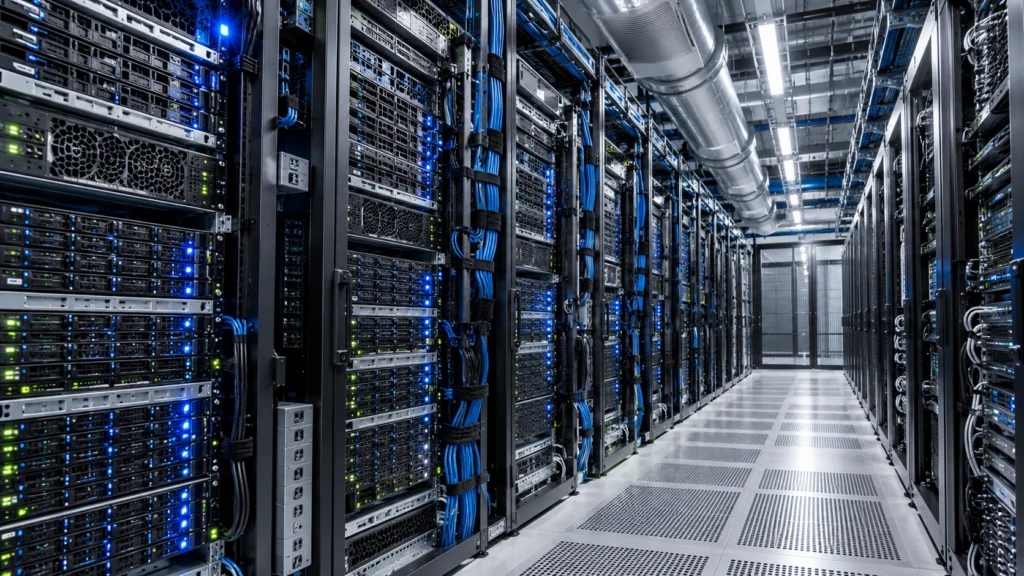
Physical capacity remains an important part of planning, but it should not be measured only by the amount of unused floor space in a facility.
Organizations should understand how many racks are available, how much rack-unit capacity remains and whether the physical environment can accommodate the type of equipment being planned.
Equipment depth, weight, cabling, power distribution and maintenance access can all influence whether apparently available space is practically usable.
Facility layout should therefore support both equipment installation and ongoing operations. Crystal Peaks incorporates these considerations into its data center design and construction planning.
5. Account for Increasing Rack Density
Rack density has become increasingly important as organizations deploy more computing capability within smaller physical footprints.
A rack containing conventional enterprise servers may create very different electrical and thermal requirements from one containing GPU-based systems, AI infrastructure or other high-performance computing equipment.
This creates an important distinction between physical capacity and infrastructure capacity. A data center can have empty rack space while still being unable to support the power or cooling requirements of the equipment intended for that space.
Future rack-density assumptions should therefore form part of long-term capacity planning rather than relying only on the characteristics of equipment currently installed.
6. Include Network Capacity in the Plan
Infrastructure growth can also increase network requirements. Additional applications, cloud connections, storage traffic, remote users and data-intensive workloads can change the amount and type of connectivity required.
Capacity planning should consider available bandwidth, carrier options, network equipment capacity and the potential impact of future workloads.
Connectivity should not become an afterthought when planning additional compute and storage infrastructure. The network environment needs to scale alongside the systems it supports.
7. Forecast Workload and Storage Growth
Historical utilization can provide useful information, but future capacity cannot always be predicted by simply extending past growth rates.
Organizations should also consider known business and technology changes. New applications, increased data retention, virtualization, private cloud deployments, AI workloads and hardware refreshes can all change infrastructure requirements.
Storage growth may follow a different pattern from compute demand, while new hardware can increase rack power requirements even when the total number of physical systems decreases.
Capacity forecasts should therefore combine observed utilization with planned technology and business changes.
8. Identify Capacity Thresholds Before They Become Constraints
Waiting until infrastructure reaches its absolute limit can leave little time to design, procure and deploy additional capacity.
Organizations can instead establish thresholds that indicate when additional investigation or expansion planning should begin.
These thresholds do not need to be identical across every resource. Power, cooling, storage, network capacity and rack availability may each require different planning horizons depending on how quickly additional infrastructure can be provided.
The important point is to provide enough time for infrastructure decisions to be made deliberately rather than under immediate capacity pressure.
9. Consider Redundancy When Calculating Usable Capacity
Total installed capacity and usable operational capacity are not always the same.
Some infrastructure capacity may need to remain available to support redundancy, maintenance or equipment failure scenarios. Treating all installed capacity as continuously usable could reduce the resilience intended by the facility design.
Capacity planning should therefore reflect the actual operating architecture and the level of redundancy required for critical workloads.
This is particularly important for power and cooling systems, where reserve capacity may form part of the strategy for maintaining operations during maintenance or equipment disruption.
10. Build Capacity Planning Around Future Infrastructure
The most useful capacity plan looks beyond the next equipment deployment.
Organizations should consider what their infrastructure could look like several years ahead, including changes in server density, storage requirements, network traffic and workload types.
Planning for growth does not necessarily mean installing all future infrastructure immediately. Instead, the facility should provide a practical path for adding capacity as requirements increase.
This can influence decisions around electrical distribution, cooling systems, rack layout, connectivity and available expansion areas.
Data Center Capacity Planning Checklist
A capacity review should provide practical answers about what the environment can support today and where future constraints may develop. Organizations can consider the following questions:
- How much electrical capacity is currently being used?
- How much usable power remains where future equipment will be installed?
- Can the cooling environment support additional electrical and thermal load?
- How much rack and rack-unit capacity remains available?
- What rack densities are expected from future equipment?
- Is network capacity sufficient for expected workload growth?
- How quickly are compute and storage requirements increasing?
- What capacity needs to remain available for redundancy?
- Which infrastructure resource is most likely to become constrained first?
- How can additional power, cooling, space or connectivity be added when required?
Common Capacity Planning Mistakes
One common mistake is treating floor space as the primary measure of data center capacity. Empty racks or unused floor area do not necessarily mean the facility has sufficient power and cooling for additional equipment.
Another issue is relying only on facility-wide totals. Capacity may be available somewhere within the building but not in the specific data hall, row or rack where equipment needs to operate.
Organizations can also underestimate the effect of hardware refreshes. New equipment may provide substantially more computing performance within the same physical footprint while increasing power density and cooling requirements.
Finally, capacity planning based only on current utilization can overlook known future projects. Planned applications, additional data, AI workloads and infrastructure consolidation should be included when forecasting requirements.
Capacity Planning for Colocation Environments
Capacity planning is especially important when organizations are evaluating a long-term colocation environment.
The initial deployment may require only a portion of the infrastructure that will eventually be hosted. Organizations should therefore consider whether additional racks, electrical capacity, cooling and connectivity can be made available as requirements increase.
A facility that meets immediate requirements but provides limited expansion options may eventually require equipment to be redistributed or migrated again.
Organizations considering this approach can explore Crystal Peaks’ enterprise colocation data center solutions and how infrastructure requirements can be planned around longer-term growth.
Connecting Capacity Planning With Data Center Modernization
Capacity planning can also reveal where existing infrastructure may need to change rather than simply expand.
For example, increasing rack density may make older power distribution or cooling approaches less suitable for future equipment. In these situations, the requirement may involve infrastructure modernization rather than adding more of the same capacity.
This makes capacity planning useful for longer-term infrastructure decisions. It provides visibility into where current resources may become constrained and where facility design may need to evolve alongside computing requirements.
Planning Data Center Capacity for Long-Term Growth
Data center capacity planning provides organizations with a clearer understanding of how current infrastructure utilization relates to future growth.
Effective planning considers power, cooling, rack space, density, connectivity and supporting infrastructure together. It also recognizes that physical space alone does not determine how much additional IT equipment a facility can support.
By establishing current utilization, forecasting future requirements and identifying potential constraints early, organizations can make infrastructure decisions before available capacity becomes an operational limitation.
Crystal Peaks Data Centers approaches capacity as part of a wider infrastructure strategy designed around power, self-contained closed-loop cooling, equipment requirements and future scalability.
Learn more about Crystal Peaks’ data center infrastructure planning, review its cooling infrastructure approach, or explore data center services.
Frequently Asked Questions About Data Center Capacity Planning
What is data center capacity planning?
Data center capacity planning is the process of evaluating current infrastructure utilization and forecasting future requirements across resources such as power, cooling, rack space, connectivity and supporting facility systems.
What should be included in data center capacity planning?
Capacity planning should consider electrical capacity, cooling, physical rack space, rack density, network connectivity, storage growth, redundancy and expected future workload requirements.
Why are power and cooling important for data center capacity?
IT equipment requires electrical power and produces heat while operating. Additional electrical capacity therefore needs to be considered alongside the cooling capacity required to manage the resulting thermal load.
How does rack density affect data center capacity?
Higher rack density concentrates more electrical and thermal load within a smaller physical area. A facility can therefore have available rack space while lacking sufficient power or cooling for the equipment intended for that space.
How often should data center capacity be reviewed?
Capacity should be reviewed regularly and when significant infrastructure changes are planned. New applications, hardware refreshes, additional storage, AI workloads and expansion projects can materially change future requirements.
Why should future growth be included in capacity planning?
Infrastructure that meets current requirements may not support future equipment density or workload growth. Including expected changes helps organizations identify potential constraints early and create a practical path for expansion.