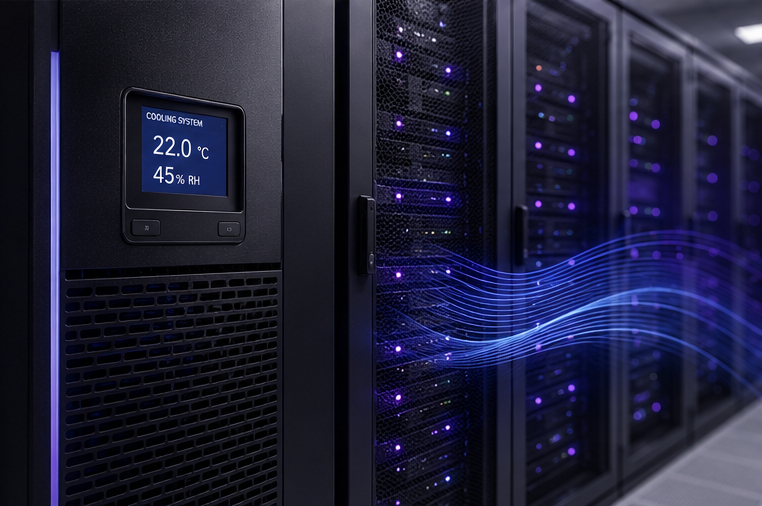
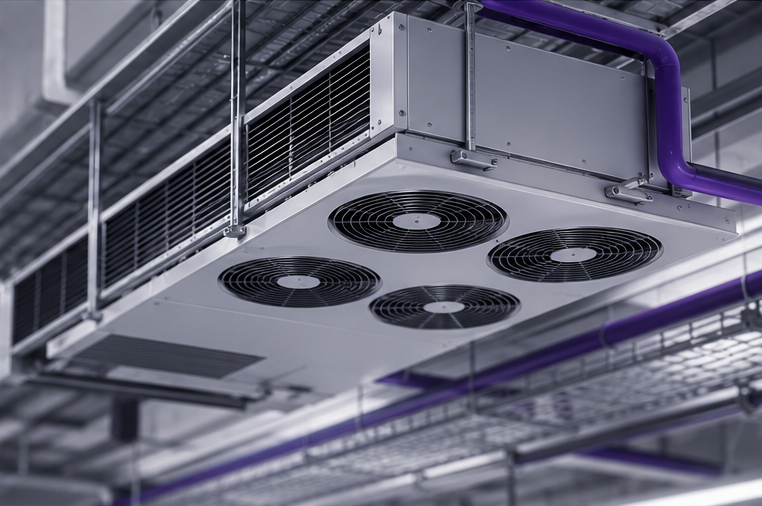
Cooling infrastructure is one of the most important parts of a high-performance data center. Servers, storage systems, networking equipment, and cloud infrastructure all generate heat during operation. If that heat is not managed properly, equipment performance can suffer, uptime can be placed at risk, and long-term infrastructure growth can become harder to support.
At Crystal Peaks Data Centers, cooling infrastructure planning focuses on performance, efficiency, reliability, and scalability through self-contained closed loop cooling. A strong cooling strategy helps protect critical systems, supports stable equipment operation, prepares the data center environment for heavier workloads, and supports responsible facility planning as a community partner.
Why Cooling Infrastructure Matters
Data center equipment depends on controlled environmental conditions. When servers and networking systems operate at high temperatures for too long, the risk of hardware strain, performance issues, shutdowns, and shortened equipment life can increase. Cooling infrastructure helps maintain the stable conditions needed for dependable digital operations.
Cooling is also closely connected to uptime. A data center may have strong power, secure access, and good connectivity, but poor cooling can still create serious operational risk. As workloads grow and equipment density increases, heat management becomes even more important. This is why cooling should be planned early, not added as an afterthought.
For Crystal Peaks, cooling infrastructure is also part of responsible site planning. The focus is not only on performance inside the facility, but also on how the data center operates around the surrounding community. Facilities should be quiet, controlled, and planned in a way that does not increase local utility costs.
The broader role of data center environments is to support reliable computing systems, and cooling is one of the core facility layers that makes that reliability possible.
Core Parts of Data Center Cooling Infrastructure
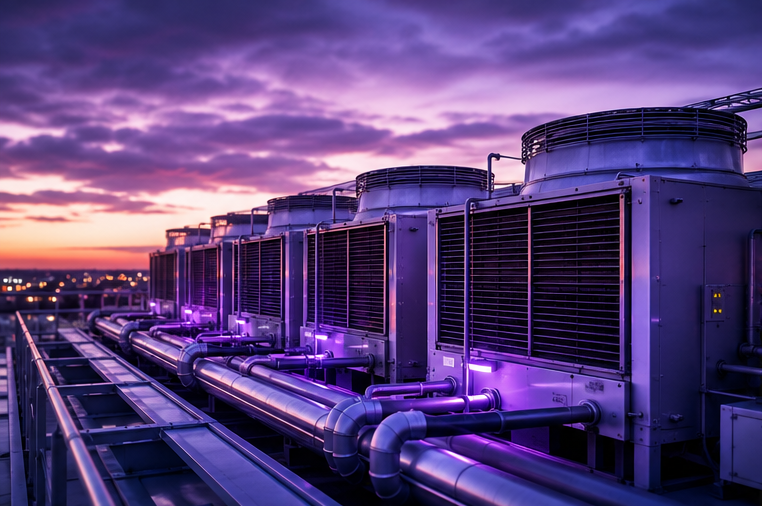
Cooling infrastructure includes more than air conditioning. It involves self-contained closed loop cooling, airflow planning, equipment layout, environmental monitoring, containment strategies, cooling capacity, redundancy planning, and long-term load forecasting. Each of these areas affects how well the facility can support current and future equipment demands.
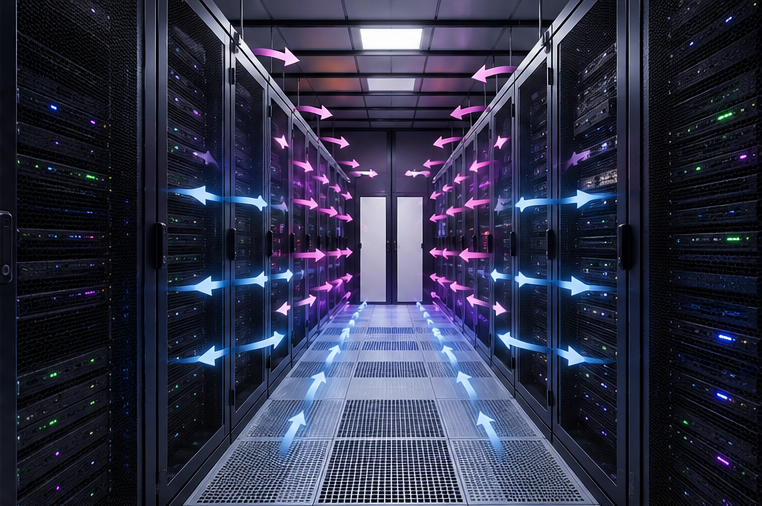
A successful cooling plan considers how heat moves through the room, how equipment is arranged, where cold air enters, where hot air exits, and how the environment will respond as more systems are added. This type of planning helps reduce hot spots, improve operational predictability, support better infrastructure performance, and maintain a controlled facility environment.
| Cooling Area | Why It Matters |
|---|---|
| Self-Contained Closed Loop Cooling | Helps manage heat within a controlled facility environment while supporting reliable equipment performance. |
| Airflow Planning | Helps direct cool air to equipment and move warm air away from critical systems. |
| Cooling Capacity | Supports current equipment loads while preparing for future growth. |
| Environmental Monitoring | Provides visibility into temperature, humidity, and facility conditions. |
| Equipment Layout | Improves airflow control and reduces the risk of heat concentration. |
| Community-Focused Planning | Supports quiet facility operations and helps avoid increasing local utility costs. |
| Redundancy Planning | Helps support uptime if cooling equipment requires maintenance or experiences disruption. |
Cooling Infrastructure Starts With Design
Cooling performance is shaped by the way the data center is designed. Room layout, rack placement, ceiling height, flooring, mechanical systems, and equipment density all influence how effectively heat can be managed. If these factors are not planned correctly, the facility may face cooling inefficiencies or capacity limits later.
Crystal Peaks supports cooling strategy through practical data center design and construction planning. By considering self-contained closed loop cooling requirements early, organizations can create infrastructure environments that are better prepared for uptime, performance, quiet operations, and scalable growth.
Good design also helps avoid expensive corrections. Retrofitting cooling systems after equipment is already installed can be disruptive and costly. Early planning gives businesses a clearer path for managing heat, supporting equipment, protecting long-term infrastructure investment, and reducing concerns around noise or utility impact for nearby communities.
Self-Contained Closed Loop Cooling
Self-contained closed loop cooling is central to the Crystal Peaks approach. This type of cooling strategy supports thermal control within the data center environment, helping equipment operate under stable conditions while reducing unnecessary exposure to outside variables.
For businesses evaluating data center infrastructure, this matters because cooling is directly tied to uptime, reliability, equipment protection, and long-term growth. A self-contained closed loop cooling model also supports a more controlled facility design, which is important for organizations that need dependable performance without unnecessary operational disruption.
Cooling, Power, and Equipment Density
Cooling infrastructure must be planned alongside power and equipment density. As more powerful servers and higher-density systems are deployed, they often create more heat in a smaller physical footprint. This means cooling systems must be able to support concentrated equipment loads without creating hot spots or uneven temperature control.
Power planning and cooling planning are connected because equipment load affects both energy use and heat output. A facility that can support higher power demand must also be able to manage the additional heat that comes with that demand. Ignoring this connection can create limits on future expansion and affect system reliability.
Crystal Peaks also emphasizes that data center planning should not increase utility costs for the surrounding community. Responsible infrastructure planning considers the facility’s performance needs while also protecting local confidence, utility stability, and long-term community relationships.
For organizations planning cloud systems, colocation environments, artificial intelligence workloads, or larger digital platforms, cooling must be treated as a central part of infrastructure strategy rather than a basic facility requirement.
Cooling Infrastructure and Uptime
Uptime depends on stable facility conditions. When cooling systems are properly planned and monitored, they help reduce the risk of overheating, equipment shutdowns, and emergency maintenance. This supports a more dependable environment for business-critical systems, applications, data platforms, and connected services.
Cooling redundancy can also support uptime by giving the facility more resilience during maintenance or equipment issues. If one part of the cooling system is unavailable, redundancy planning can help maintain stable conditions while the issue is addressed. This is especially important for businesses that cannot afford unnecessary service disruption.
Quiet Facility Operations and Community Partnership
Cooling infrastructure must support the data center without creating unnecessary disruption around the facility. Crystal Peaks emphasizes quiet facility operations, responsible infrastructure planning, and a community partner approach. These points are important because data center performance should not come at the expense of nearby residents, businesses, municipalities, or local services.
By planning cooling, power, site layout, and operational systems carefully, Crystal Peaks supports facilities that are not noisy and do not increase utility costs for the surrounding community. This helps position the data center as a reliable infrastructure asset and a responsible long-term partner.
Cooling and Compliance-Ready Operations
Cooling infrastructure can also support compliance-ready operations. Organizations that manage sensitive information often need reliable documentation, environmental controls, access procedures, and operational visibility. Temperature and humidity monitoring can form part of a broader infrastructure management process that supports responsible governance.
Crystal Peaks helps organizations connect facility planning with secure and accountable operations through data center compliance planning. When cooling, access control, documentation, monitoring, and maintenance procedures are aligned, businesses can create stronger operational structure around critical systems.
Scalable Cooling for Future Data Center Growth
Cooling infrastructure should support where the organization is going, not only where it is today. As digital demand grows, businesses may need more equipment, higher-density racks, stronger connectivity, additional storage, and more advanced computing capacity. These changes can place more pressure on cooling systems.
Scalable cooling planning helps prepare for growth without unnecessary disruption. It allows organizations to think ahead about future equipment loads, expansion areas, cooling upgrades, monitoring requirements, and facility performance. This is especially important for businesses using colocation solutions, cloud infrastructure, or enterprise systems that may expand over time.
When cooling is planned properly, businesses can reduce the risk of outgrowing their environment too quickly. They can also make more informed infrastructure decisions around capacity, investment, long-term data center performance, and responsible community impact.
How Crystal Peaks Supports Cooling Infrastructure
Crystal Peaks Data Centers supports cooling infrastructure planning as part of a complete data center strategy. Cooling must work with power, connectivity, security, compliance, equipment layout, community considerations, and long-term growth planning to create a reliable environment for digital operations.
Whether a business is planning data center space, evaluating infrastructure needs, preparing for higher equipment density, or building a more scalable environment, Crystal Peaks provides practical support across key facility and infrastructure areas. Learn more about the full range of data center services available through Crystal Peaks Data Centers.
Frequently Asked Questions About Cooling Infrastructure
What is cooling infrastructure in a data center?
Cooling infrastructure includes the systems and planning used to manage heat in a data center, including self-contained closed loop cooling, airflow, cooling capacity, equipment layout, environmental monitoring, and redundancy.
Why is cooling infrastructure important?
Cooling infrastructure helps protect equipment performance, reduce overheating risk, support uptime, and create stable operating conditions for servers, storage, networking, and cloud systems.
What is self-contained closed loop cooling?
Self-contained closed loop cooling is a controlled cooling approach that helps manage heat within the data center environment, supporting reliable equipment performance, uptime, and long-term infrastructure planning.
How does cooling infrastructure support scalability?
Cooling infrastructure supports scalability by preparing the facility for future equipment growth, higher-density systems, increased heat output, and changing data center performance requirements.
Should cooling be planned before equipment is installed?
Yes. Cooling should be planned early so the facility can support equipment layout, airflow, capacity, monitoring, redundancy, and future expansion without unnecessary disruption.
How does Crystal Peaks support surrounding communities?
Crystal Peaks supports surrounding communities through quiet facility operations, responsible infrastructure planning, and a data center approach that does not increase local utility costs.