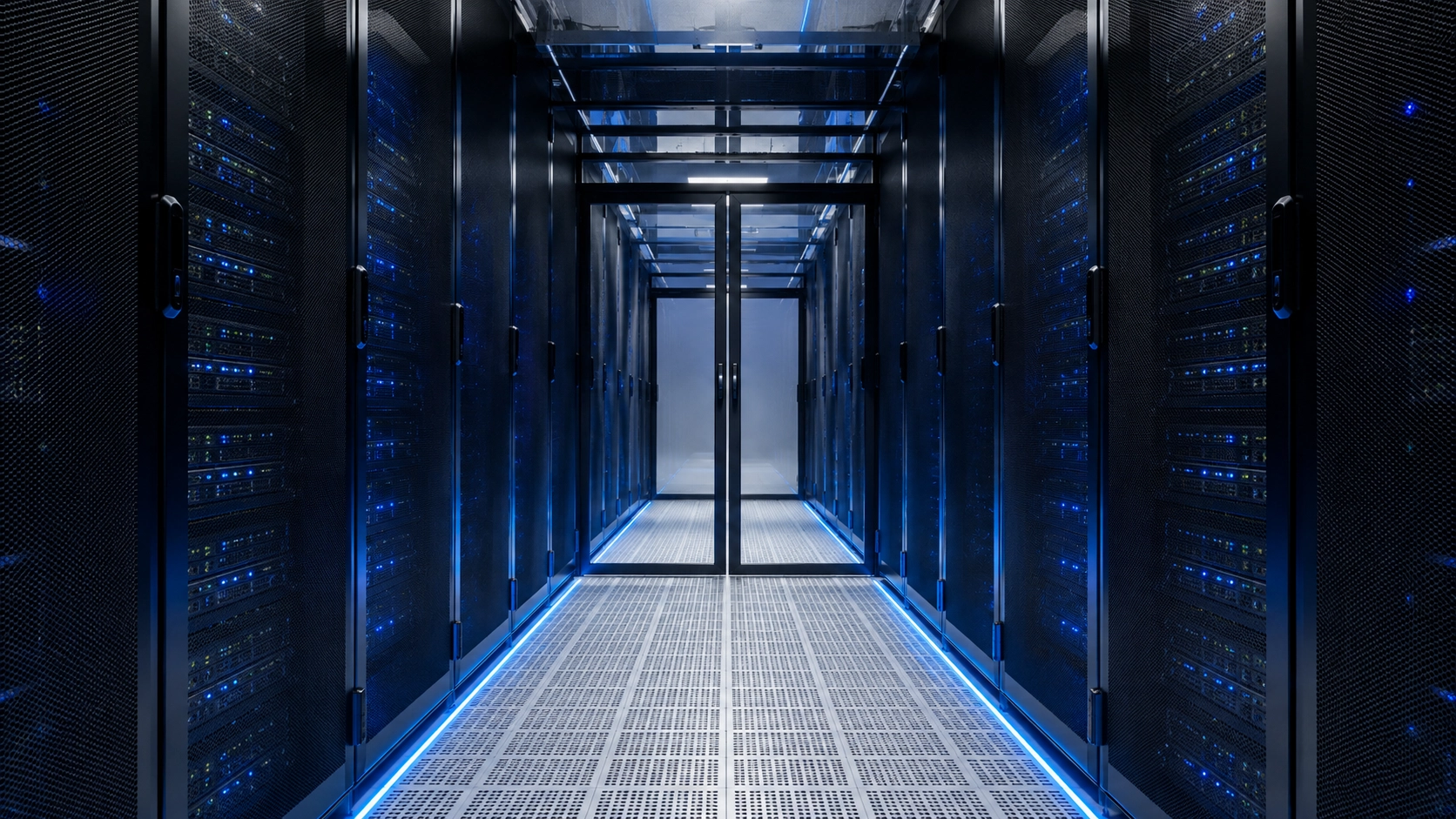
Data center cooling systems manage the heat produced by servers, storage equipment, networking hardware and other computing infrastructure. As equipment becomes more powerful and greater computing capacity is concentrated into individual racks, cooling has become one of the most important considerations in data center design and long-term infrastructure planning.
There is no single cooling architecture that is right for every facility. Air-based cooling, aisle containment, close-coupled systems, rear-door heat exchangers, direct-to-chip liquid cooling and immersion cooling all manage heat differently. The appropriate approach depends on equipment density, power demand, facility layout, redundancy requirements, monitoring, maintenance needs and anticipated future growth.
Crystal Peaks Data Centers considers cooling alongside power, equipment density, facility layout, monitoring and long-term infrastructure requirements. Its planning approach emphasizes self-contained closed loop cooling as part of a wider facility strategy that also includes community partnership, quiet facility operations and infrastructure planning intended so surrounding communities do not experience increased local utility costs.
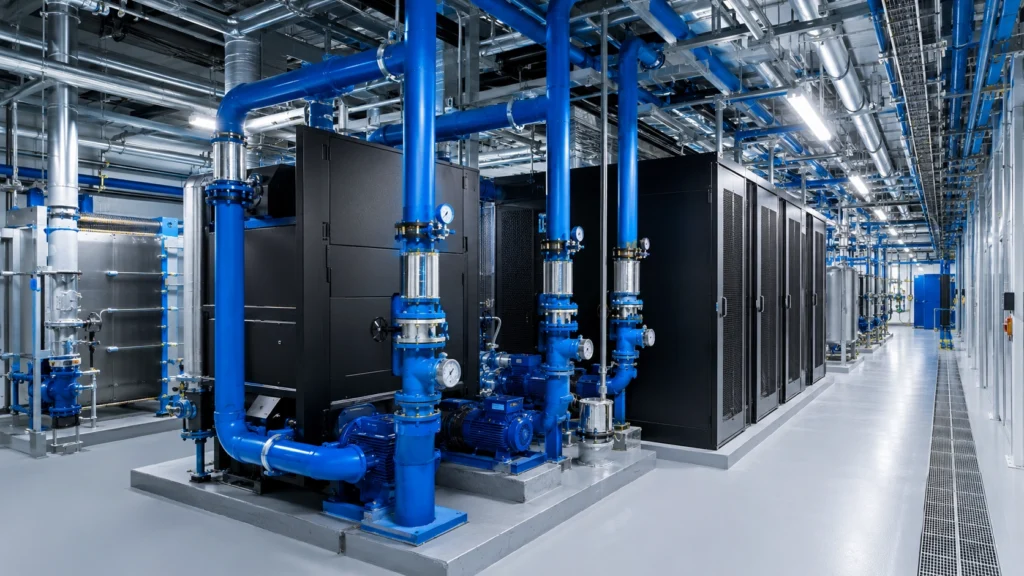
What Are Data Center Cooling Systems?
Data center cooling systems are the mechanical systems, equipment, controls and air or liquid pathways used to remove heat from IT equipment and transfer it away from the computing environment.
Servers convert the electrical energy they consume into heat while operating. That heat must move away from processors, memory, storage devices and other components so equipment can remain within suitable operating conditions.
Cooling therefore forms part of a larger thermal-management chain. Heat first has to move away from the IT components, then away from the rack or equipment area, and finally through the facility’s heat-rejection infrastructure.
A complete cooling strategy may include airflow management, containment, cooling units, pumps, fans, heat exchangers, coolant distribution equipment, piping, sensors, monitoring, controls and facility-level heat rejection.
Main Types of Data Center Cooling Systems
Modern data centers can use several cooling approaches individually or together. The most suitable combination depends largely on the equipment being installed, the amount of heat being generated and how the facility is expected to develop over time.
| Cooling Type | How It Works | Key Planning Consideration |
|---|---|---|
| Room-Based Air Cooling | Conditioned air is supplied to the data hall while warmer exhaust air returns to cooling equipment. | Airflow paths, room layout, rack density and hot-air recirculation. |
| Hot-Aisle / Cold-Aisle | Racks are arranged to separate equipment intakes from warmer exhaust air. | Rack orientation and consistent equipment airflow. |
| Aisle Containment | Physical barriers reduce mixing between cooler supply air and warmer return air. | Containment design, leakage control, fire protection and maintenance access. |
| In-Row / Close-Coupled Cooling | Cooling equipment is positioned closer to the IT load. | Rack density, available space, piping, electrical supply and redundancy. |
| Rear-Door Heat Exchangers | A heat exchanger mounted to a rack captures heat from server exhaust air. | Coolant supply, condensation control, rack compatibility and maintenance. |
| Direct-to-Chip Liquid Cooling | Liquid passes through cold plates attached directly to high-heat components. | CDUs, piping, flow, pressure, monitoring and hardware compatibility. |
| Immersion Cooling | IT equipment is partially or fully immersed in a dielectric cooling fluid. | Hardware compatibility, fluid handling, servicing and facility design. |
1. Room-Based Air Cooling
Air cooling remains a fundamental part of many data center environments. In a conventional air-cooled design, cooling equipment supplies conditioned air to the data hall while warmer air produced by IT equipment is returned to the cooling system.
The challenge is not simply producing cooler air. That air has to reach server intakes while warmer exhaust air is moved away efficiently.
If warmer exhaust air recirculates toward equipment intakes, inlet temperatures can rise. If conditioned air bypasses the servers and returns directly to the cooling equipment, available cooling capacity may also be used less effectively.
Air-cooled facility design therefore needs to consider rack arrangement, equipment airflow direction, obstructions, supply and return paths, rack density and containment.
2. Hot-Aisle and Cold-Aisle Layouts
A hot-aisle and cold-aisle arrangement is one of the most widely used methods for improving airflow management in air-cooled facilities.
Racks are typically arranged front-to-front and back-to-back. Because conventional servers usually draw air through the front and discharge warmer air through the rear, this creates alternating cooler intake aisles and warmer exhaust aisles.
The purpose is to reduce the likelihood that hot exhaust from one rack immediately enters the intake of another.
ASHRAE identifies hot-aisle and cold-aisle arrangements as an important part of airflow management within data center environments. Additional containment can improve separation between supply and return air.
For further technical guidance, organizations can review the ASHRAE Handbook guidance for data centers and telecommunications facilities.
3. Hot-Aisle and Cold-Aisle Containment
Containment takes airflow management further by using doors, panels, partitions or other barriers to limit mixing between cooler supply air and warmer return air.
Cold-aisle containment encloses the supply-air environment around server intakes, while hot-aisle containment captures warmer equipment exhaust and directs it toward the cooling return path.
Both approaches aim to keep supply and return air separated for as long as practical.
Containment should be coordinated with fire protection, maintenance access, rack layout, cable pathways and the wider cooling architecture. It is therefore most effective when considered during data center design and construction planning rather than treated as an isolated retrofit.
4. In-Row and Close-Coupled Cooling
As rack heat loads increase, cooling equipment can be positioned closer to the source of the heat. In-row and other close-coupled approaches reduce the distance between the IT equipment and the cooling system.
An in-row cooling unit can be positioned within or immediately beside a row of server racks. Instead of relying only on room-level air movement, cooling is provided closer to the equipment generating the thermal load.
These systems can be useful where concentrated rack loads create cooling requirements that are difficult to address through conventional room-level airflow alone.
Close-coupled cooling still requires careful planning around capacity, airflow, piping, electrical supply, equipment layout, monitoring and redundancy.
5. Rear-Door Heat Exchangers
A rear-door heat exchanger places a cooling coil directly at the rear of a server rack. Warm exhaust air produced by the servers passes through the heat exchanger before entering the surrounding room.
This brings heat removal closer to the equipment and can reduce the amount of thermal energy released directly into the data hall.
Rear-door heat exchangers need to be coordinated with rack dimensions, coolant piping, maintenance access, facility cooling systems and operating temperatures. The cooling-water or coolant temperature also has to be managed appropriately to control condensation risk.
6. Direct-to-Chip Liquid Cooling
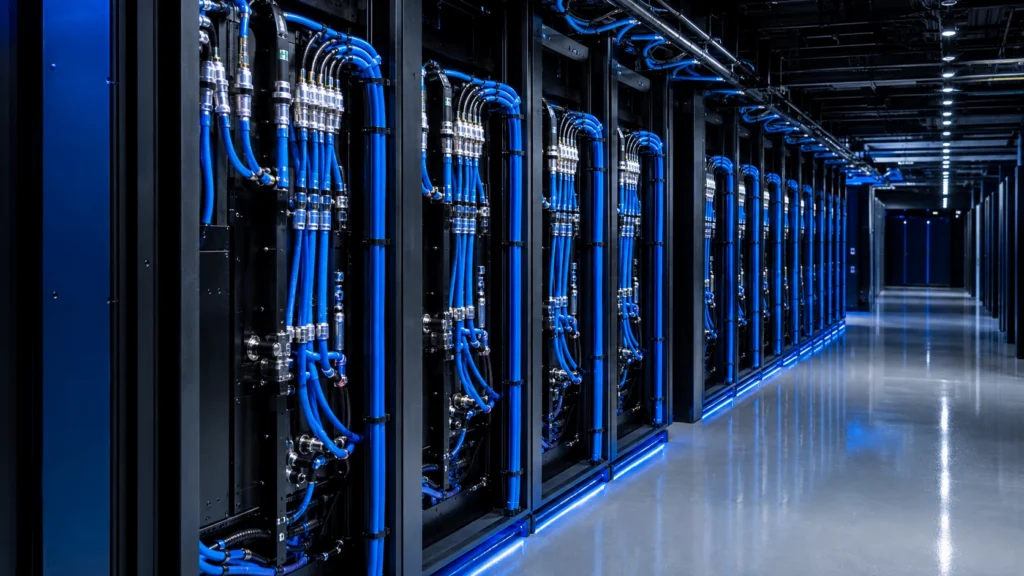
Direct-to-chip cooling transfers heat into liquid very close to the components generating the highest thermal loads.
Cold plates are attached to components such as CPUs, GPUs or accelerators. Coolant moves through channels in the cold plate, absorbs heat from the component and transfers it toward the wider cooling infrastructure.
This differs from conventional air cooling because a substantial portion of the thermal load can be captured before that heat reaches the surrounding server air.
Direct liquid cooling is becoming increasingly relevant for AI, high-performance computing and GPU-intensive environments where concentrated heat loads may challenge conventional air-cooled architectures.
ASHRAE discusses direct-to-chip cooling, rear-door heat exchangers and other liquid-assisted technologies within its guidance for increasingly dense AI computing environments. Learn more through ASHRAE’s energy and thermal efficiency guidance for AI data centers.
7. Cooling Distribution Units
A cooling distribution unit, commonly known as a CDU, is an important part of many liquid-cooled environments.
A CDU can provide an interface between facility-level cooling infrastructure and the technology-side liquid loop serving the IT equipment. Depending on the architecture, it may help manage coolant flow, temperature, pressure and heat transfer between the two systems.
This separation can be important because the coolant conditions required by IT equipment may differ from those used within the broader facility cooling loop.
A CDU is therefore one component of a wider system. Pumps, heat exchangers, controls, sensors, piping and heat-rejection infrastructure all need to work together.
8. Immersion Cooling
Immersion cooling uses a different thermal-management approach by placing compatible computing hardware directly into a non-conductive dielectric cooling fluid.
Instead of transferring most component heat into server air, the fluid absorbs heat directly from the immersed hardware. That thermal energy can then be transferred through the cooling system for rejection elsewhere.
Immersion systems can use single-phase or two-phase approaches. In a single-phase system, the coolant remains liquid as it absorbs and transfers heat. Two-phase systems use a fluid that changes phase as part of the heat-transfer process.
Although immersion cooling can support high heat densities, it changes several aspects of conventional data center operations. Hardware compatibility, fluid selection, maintenance procedures, equipment handling and facility layout all need to be evaluated before deployment.
Core Components of Data Center Cooling Systems
The exact equipment varies according to the cooling architecture, but modern data center cooling systems can include several interconnected components.
- Cooling units: Equipment used to condition air or cooling fluid and remove heat from the operating environment.
- Fans: Move supply and return air through air-cooled systems and equipment.
- Pumps: Move water, coolant or other fluids through liquid cooling loops.
- Heat exchangers: Transfer heat between air, liquid or separate cooling circuits.
- Cooling distribution units: Interface technology-side liquid loops with facility cooling infrastructure.
- Cold plates: Transfer heat directly from processors and other high-heat components into circulating coolant.
- Containment: Helps separate cooler supply air from warmer equipment exhaust.
- Piping and hoses: Carry coolant between IT equipment, distribution units and heat exchangers.
- Sensors: Measure conditions such as temperature, humidity, flow and pressure.
- Controls: Coordinate cooling equipment in response to changing IT loads and environmental conditions.
- Heat-rejection equipment: Transfers captured thermal energy away from the facility cooling loop.
Environmental Monitoring and Cooling Controls
Cooling systems need accurate information about the conditions they are supporting. Environmental monitoring provides facility teams with visibility into how conditions change across the data center.
Temperature sensors can identify thermal variations at different points in a data hall. Humidity monitoring can support environmental management, while liquid-cooling systems may also require visibility into coolant temperature, flow, pressure and equipment status.
This information helps cooling controls and operations teams respond to changing loads rather than treating the facility as a static environment.
That becomes especially important as rack density increases. Additional equipment, higher processor utilization or denser hardware can increase heat output without increasing the physical size of the data hall.
Crystal Peaks includes environmental monitoring, cooling capacity and long-term load forecasting within its wider approach to data center cooling infrastructure.
Why Cooling and Power Must Be Planned Together
Cooling capacity and electrical capacity should not be planned independently.
Higher-powered IT equipment generally produces more heat. A facility may have enough physical rack space for additional servers but still be unable to support them if sufficient electrical and cooling capacity are not available.
This relationship becomes particularly important for GPU-intensive AI environments and other high-density workloads. Concentrating additional electrical power within individual racks creates a corresponding thermal-management requirement.
The U.S. Department of Energy’s Best Practices Guide for Energy-Efficient Data Center Design considers IT systems, environmental conditions, air management, cooling and electrical infrastructure as connected elements of efficient facility design.
Crystal Peaks similarly connects power, cooling and equipment-density requirements through its data center infrastructure planning approach.
Self-Contained Closed Loop Cooling at Crystal Peaks
Crystal Peaks Data Centers identifies self-contained closed loop cooling as a central part of its planned cooling infrastructure.
The approach is intended to create a controlled cooling environment that can be coordinated with equipment requirements, infrastructure reliability, monitoring, maintenance and long-term capacity planning.
Cooling is considered during the broader planning process alongside room layout, rack placement, equipment density, power demand, environmental monitoring and redundancy rather than being added after the rest of the facility design has been completed.
This planning-first approach is important because significant changes to cooling architecture after IT infrastructure has already been deployed can introduce additional cost, disruption and operational complexity.
Organizations considering future enterprise colocation infrastructure should therefore evaluate cooling alongside power, connectivity, security and expected equipment growth.
Community Partnership and Responsible Cooling Planning
Cooling infrastructure also needs to be considered in relation to the surrounding community. Mechanical equipment, heat-rejection systems, utility requirements, site layout, maintenance activity and facility access can influence how a data center interacts with nearby residents, businesses and other organizations.
Crystal Peaks emphasizes community partnership as part of its facility-planning approach. This means considering surrounding stakeholders and local conditions alongside the technical requirements of the data center as infrastructure is planned and developed.
The company also plans for quiet facility operations. Cooling equipment, mechanical systems, heat-rejection infrastructure, access areas and maintenance activity should be considered during site planning so acoustic impact can be managed as part of the overall design.
Crystal Peaks’ stated infrastructure-planning approach is also intended so that surrounding communities do not experience increased local utility costs. This position should be understood specifically in relation to the company’s planning approach and should not be expanded into claims about municipal rates, taxes, subsidies, individual electricity bills or unrelated utility pricing.
How to Plan Data Center Cooling Systems for Future Growth
The cooling requirement at initial deployment may be very different from what the same facility needs several years later. Cooling planning should therefore consider how the IT environment may develop rather than focusing only on the equipment installed on day one.
Important planning factors include expected rack density, equipment type, electrical demand, cooling architecture, redundancy, maintenance access, monitoring, available mechanical space and possible future transitions toward higher-density computing.
A facility supporting conventional enterprise servers today may later need to accommodate AI systems, GPU infrastructure or high-performance computing. The cooling strategy should provide a realistic path for responding to changing thermal requirements where those future workloads are expected.
Crystal Peaks approaches planned facilities with scalability in mind. Its data center pre-leasing approach considers cooling together with power, connectivity, security and long-term tenant infrastructure requirements.
Important Cooling System Planning Questions
Before selecting or designing a cooling architecture, project teams should be able to answer practical questions such as:
- What is the expected IT load at initial deployment?
- How much could rack density increase in the future?
- Which equipment will generate the greatest heat loads?
- Can conventional air cooling support those loads effectively?
- Will close-coupled or liquid-assisted cooling be required?
- Could future AI or GPU deployments require direct liquid cooling?
- How will supply and return airflow be separated?
- What level of cooling redundancy is appropriate?
- How will temperature, humidity, flow and other relevant conditions be monitored?
- How will cooling equipment be maintained without unnecessary disruption to critical infrastructure?
- Can cooling capacity expand as IT capacity increases?
Common Data Center Cooling System Planning Mistakes
Cooling problems are often created by planning decisions rather than by one individual piece of equipment. Common mistakes include:
- Planning cooling capacity independently from electrical capacity.
- Designing only around current rack density.
- Allowing excessive mixing between supply and exhaust air.
- Ignoring airflow restrictions created by rack layouts or cabling.
- Adding high-density equipment without reviewing the existing cooling architecture.
- Failing to consider redundancy and maintenance requirements.
- Installing liquid cooling infrastructure without sufficient monitoring and control planning.
- Leaving insufficient room for future mechanical or cooling-system expansion.
Many of these problems are easier to address during the planning phase than after a facility has reached operational capacity. Integrating cooling into facility design can provide a clearer path toward reliable long-term infrastructure.
Building Data Center Cooling Systems Around the Workload
Modern data center cooling systems range from conventional air-based architectures to highly targeted liquid-cooling technologies. Each approach has a role, but the appropriate solution depends on workload, rack density, facility layout, power availability, operating requirements and expected future growth.
Airflow management and containment can improve conventional air-cooled environments. Close-coupled systems and rear-door heat exchangers can move heat removal closer to high-density racks. Direct-to-chip and immersion cooling provide additional options where concentrated computing loads require a different thermal-management approach.
The most important principle is that cooling architecture should be designed around the infrastructure it needs to support rather than selected in isolation.
Crystal Peaks Data Centers incorporates self-contained closed loop cooling into its wider infrastructure-planning strategy alongside power, equipment density, monitoring, redundancy and future capacity. That technical planning is also supported by community partnership, quiet facility operations and an infrastructure approach intended so surrounding communities do not experience increased local utility costs.
Learn more about Crystal Peaks’ approach to data center cooling infrastructure, explore its infrastructure planning approach, or view its broader data center services.
Frequently Asked Questions About Data Center Cooling Systems
What are data center cooling systems?
Data center cooling systems are the equipment, airflow pathways, liquid loops, controls, monitoring systems and heat-rejection infrastructure used to manage heat produced by servers and other IT equipment.
What are the main types of data center cooling systems?
Common approaches include room-based air cooling, hot-aisle and cold-aisle layouts, containment, in-row or close-coupled cooling, rear-door heat exchangers, direct-to-chip liquid cooling and immersion cooling. A facility may use more than one approach depending on workload and equipment density.
What is the difference between air cooling and liquid cooling?
Air cooling removes equipment heat primarily through controlled airflow. Liquid cooling transfers heat into a circulating coolant closer to, or directly from, high-heat components and can be useful for concentrated high-density computing loads.
What is a cooling distribution unit?
A cooling distribution unit, or CDU, can provide an interface between the technology-side liquid loop serving IT equipment and the wider facility cooling infrastructure while helping manage flow, temperature, pressure and heat transfer.
What is self-contained closed loop cooling?
Self-contained closed loop cooling uses a defined cooling loop to circulate coolant through controlled infrastructure and transfer heat away from the equipment environment. Crystal Peaks includes this approach as part of its wider planning for power, equipment density, monitoring, maintenance and future facility capacity.
Why are cooling and power planning connected?
IT equipment uses electrical power and produces heat while operating. Increasing rack power density therefore generally increases the thermal load that the cooling system must manage, making coordinated power and cooling planning important.
How does Crystal Peaks consider surrounding communities when planning cooling?
Crystal Peaks combines cooling and infrastructure planning with community partnership and quiet facility operations. Its stated approach is also intended so surrounding communities do not experience increased local utility costs, while project-specific utility and facility arrangements should be confirmed for each development.