Effective data center design is about far more than deciding where servers, racks and network equipment will be installed. A reliable facility must bring together site readiness, power, cooling, connectivity, physical security, compliance requirements and long-term capacity planning within one coordinated infrastructure strategy.
These decisions need to happen early. Choices made during site evaluation and initial design can influence how easily a facility can be developed, secured, maintained and expanded as technology requirements change.
At Crystal Peaks Data Centers, the planning approach considers utility coordination, fiber access, zoning, permitting, scalable infrastructure and operational readiness from the beginning. The objective is to create data center environments that are designed around long-term performance rather than attempting to solve infrastructure limitations after development is already underway.
What Is Data Center Design?
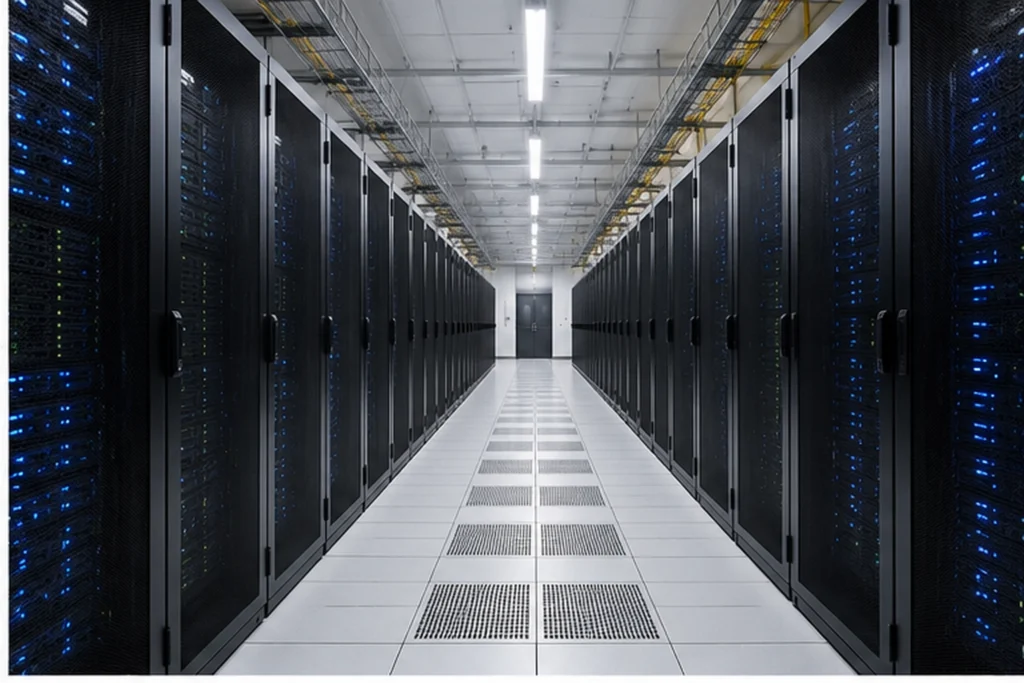
Data center design is the process of planning the physical and technical infrastructure required to support servers, storage, networking equipment and other digital systems. It covers everything from the suitability of the property to the electrical, mechanical, networking, security and operational systems required within the finished facility.
A strong design strategy considers how these systems interact. Adding more computing capacity, for example, can increase both power demand and heat output. Higher equipment density may change cooling requirements. New tenants or workloads can require additional connectivity, security controls or compliance documentation.
This interconnected approach is why data center infrastructure planning should begin before equipment is installed or workloads are migrated.
Key Data Center Design Considerations
Although every project has different requirements, several areas consistently influence the reliability and scalability of a data center environment.
| Design Area | Key Considerations | Why It Matters |
|---|---|---|
| Site Readiness | Utilities, zoning, access, fiber availability and expansion potential | Helps determine whether the location can support current and future infrastructure requirements. |
| Power | Utility capacity, distribution, backup power, redundancy and future loads | Supports equipment stability, uptime and future computing capacity. |
| Cooling | Heat load, airflow, cooling capacity, monitoring and equipment density | Helps maintain stable environmental conditions and protect equipment. |
| Connectivity | Fiber routes, network providers, redundancy and latency requirements | Supports reliable access to applications, cloud platforms and business systems. |
| Security | Perimeter protection, access controls, monitoring and restricted zones | Helps protect infrastructure against unauthorized physical access. |
| Compliance | Documentation, zoning, access logs, operational controls and governance | Supports audit visibility and regulated workload requirements. |
| Scalability | Future rack density, power, cooling, connectivity and physical space | Allows infrastructure to expand without requiring unnecessary redesign. |
1. Start Data Center Design With Site Readiness
The physical site establishes the foundation for the entire data center project. Before detailed facility plans are developed, the property should be evaluated for utility access, network availability, physical access, zoning requirements, permitting considerations and long-term expansion potential.
A site may provide sufficient space but still present development challenges if electrical capacity, fiber access or other infrastructure requirements cannot support the intended workload.
Crystal Peaks incorporates site readiness, utility coordination, fiber mapping, zoning review and permitting strategy into its data center design and construction planning. Addressing these considerations during the early stages can provide a clearer path from initial planning through development.
2. Plan Power Infrastructure for Current and Future Demand
Power is one of the most important components of data center design. Servers, storage systems, networking equipment, cooling equipment and supporting infrastructure all depend on stable electrical capacity.
The design process should therefore consider both the expected initial load and how that load may change as additional equipment is deployed. Electrical planning may include utility capacity, distribution systems, uninterruptible power supplies, backup generation, redundancy and future expansion requirements.
The U.S. Department of Energy’s Best Practices Guide for Energy-Efficient Data Center Design also emphasizes the importance of considering both initial and future electrical loads when selecting and designing data center power infrastructure.
Planning for future capacity is particularly important because adding computing power does not affect the electrical system alone. Increased electrical loads generally also influence cooling requirements and overall facility capacity.
3. Integrate Cooling Into the Facility Design
Servers and networking equipment generate heat continuously while operating. Cooling therefore needs to be treated as a core part of data center design rather than equipment that can simply be added once the server environment has been planned.
Room configuration, equipment placement, rack density, airflow, mechanical infrastructure and environmental monitoring can all affect thermal performance. As workloads become more demanding, the relationship between power density and cooling capacity becomes even more important.
Crystal Peaks emphasizes self-contained closed loop cooling as part of its infrastructure planning approach. Its broader data center cooling infrastructure strategy also considers airflow, equipment layout, monitoring, capacity, redundancy and long-term load requirements.
The goal is to create a controlled environment capable of supporting equipment reliably while preparing the facility for future infrastructure growth.
4. Design Connectivity Around Reliability and Growth
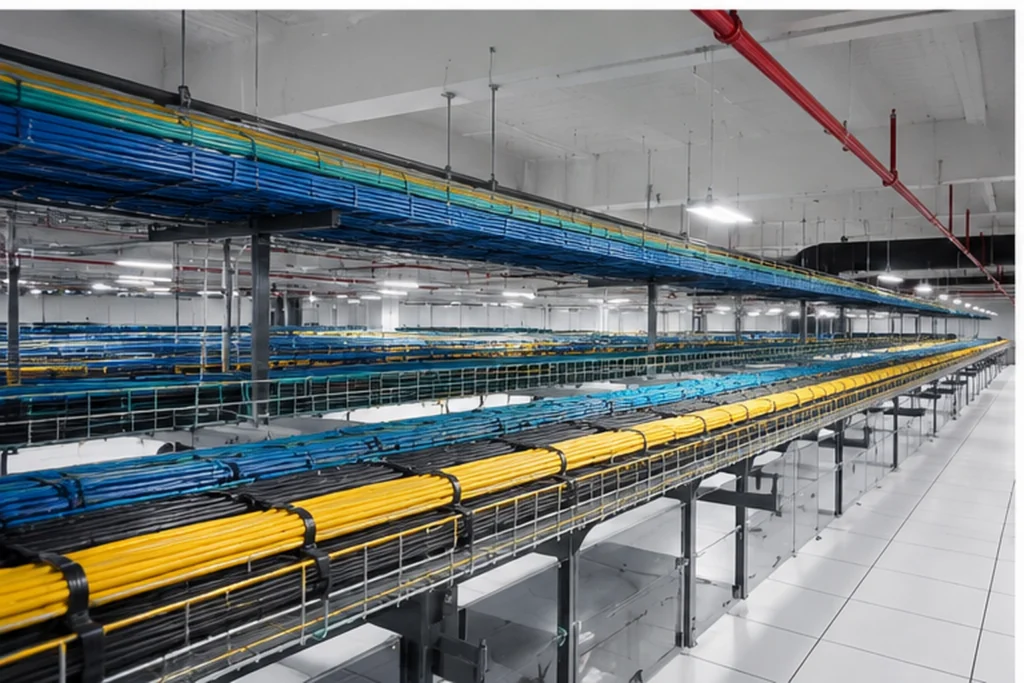
Data center infrastructure is only useful when workloads can communicate reliably with users, applications, cloud platforms and other systems. Connectivity should therefore be considered during site evaluation and facility planning rather than after the physical building has been designed.
Important considerations can include fiber availability, network routes, provider options, redundancy, latency requirements and how connectivity capacity may need to grow over time.
This is particularly relevant for enterprise systems, hybrid cloud environments, artificial intelligence workloads and regional colocation infrastructure, where network performance and physical infrastructure need to work together.
5. Consider Equipment Layout and Maintenance Access
The internal layout of a data center affects more than appearance. Rack positioning, circulation routes, restricted areas, equipment movement and access to electrical and cooling infrastructure can influence daily operations and future maintenance.
A well-planned layout should give technical teams appropriate access to critical equipment while maintaining separation between operational and restricted spaces. It should also account for how new racks, cabling and infrastructure may be added as capacity expands.
This is another reason scalability should be addressed during the initial design stage. Infrastructure that works efficiently at its initial capacity may become difficult to manage if future equipment growth was not considered in the original layout.
6. Build Physical Security Into Data Center Design
Data center security begins with the physical environment. Access points, facility perimeters, restricted zones, surveillance and credential controls can all be influenced by the architectural layout of the facility.
Rather than adding these measures after construction, Crystal Peaks incorporates security requirements into its data center security planning. This can include perimeter security, facility access, segmentation zones, monitoring, credential management and incident response considerations.
The importance of physical access control is also reflected in guidance from the National Institute of Standards and Technology (NIST), which defines physical access control systems around authentication and authorization at protected access points.
7. Include Compliance Requirements From the Beginning
Organizations operating in regulated or high-trust industries may need their infrastructure to support specific governance, security and documentation expectations. These considerations can affect physical zoning, access management, logging, operational procedures and facility controls.
Trying to retrofit these requirements later can create unnecessary complexity. A stronger approach is to identify relevant requirements during planning and determine how the physical and operational design can support them.
Crystal Peaks approaches data center compliance planning as an infrastructure consideration from the early stages of design. Planning can consider frameworks and requirements associated with HIPAA, SOC 2, ISO, NIST and client-specific governance needs where applicable.
8. Design for Scalability, Not Only Initial Capacity
One of the biggest mistakes in data center design is planning only around immediate requirements. Digital infrastructure changes quickly. Businesses may add servers, adopt more data-intensive applications, expand storage, deploy AI systems or increase their dependence on cloud-connected services.
Each of these changes can affect power, cooling, rack density, connectivity and physical space.
Scalable design provides a structured path for growth. This does not necessarily mean building every future requirement from day one. It means making design decisions that leave realistic options for additional capacity without forcing major redesigns every time demand changes.
Crystal Peaks uses a modular planning approach that anticipates changing infrastructure requirements and supports long-term facility growth.
9. Consider the Community Around the Data Center
Data center design also extends beyond the walls of the facility. Power requirements, cooling equipment, noise, utility planning, site traffic and future expansion can influence the surrounding area.
Responsible planning should therefore consider how the facility will coexist with neighboring residents, businesses, municipalities and local infrastructure.
Crystal Peaks emphasizes community partnership alongside technical facility performance, including quiet facility operations and infrastructure planning intended so surrounding communities do not experience increased local utility costs. The objective is to develop infrastructure that serves enterprise requirements while remaining a responsible long-term community partner.

How the Main Data Center Design Systems Work Together
The strongest data center designs do not treat power, cooling, networking, security and compliance as separate projects. Each part of the facility can affect another.
A higher-density deployment may require more electrical capacity and produce more heat. That can change cooling requirements. Expansion can increase network demand and create new security zones. New regulated workloads can introduce additional access-control and documentation requirements.
Planning these systems together gives developers and operators a clearer understanding of how the facility needs to perform as a complete environment.
Common Data Center Design Mistakes to Avoid
- Choosing a site before confirming utility and fiber requirements.
- Designing electrical infrastructure only around the initial IT load.
- Treating cooling as a separate system instead of connecting it to rack density and power planning.
- Leaving security and compliance planning until late in the development process.
- Failing to leave practical capacity for future expansion.
- Overlooking maintenance access, equipment movement and operational zoning.
- Ignoring the potential impact of facility infrastructure on the surrounding community.
Avoiding these problems requires coordinated planning from the earliest stages of development. Site, power, cooling, connectivity, security and operational requirements should be reviewed together rather than solved independently.
Data Center Design for Long-Term Infrastructure Performance
Successful data center design creates a foundation that can support both immediate technical requirements and long-term infrastructure growth. That means selecting an appropriate site, planning sufficient power and cooling capacity, providing dependable connectivity, integrating physical security, considering compliance requirements and leaving a realistic path for expansion.
Crystal Peaks Data Centers approaches these requirements as connected parts of the same development strategy. From site readiness and utility coordination to self-contained closed loop cooling, security and scalable infrastructure, design decisions are made with operational readiness and future performance in mind.
If your organization is evaluating a new data center environment or planning infrastructure for future digital growth, explore Crystal Peaks’ Design & Construction capabilities or review its approach to scalable infrastructure planning.
Frequently Asked Questions About Data Center Design
What is data center design?
Data center design is the process of planning the physical and technical environment required to support computing infrastructure. It includes site readiness, electrical systems, cooling, connectivity, equipment layout, security, compliance considerations and future capacity.
What are the most important considerations in data center design?
Key considerations include the site, utility capacity, electrical distribution, cooling infrastructure, network connectivity, physical security, compliance requirements, equipment layout, maintainability and the ability to scale as infrastructure demand grows.
Why is power planning important in data center design?
Power planning helps ensure that IT equipment and supporting infrastructure have sufficient electrical capacity. It should account for current loads, redundancy, backup systems and future expansion requirements.
How does cooling affect data center design?
Cooling affects room layout, rack density, equipment placement and facility capacity because servers and other IT systems generate heat. Cooling requirements should therefore be planned alongside power and equipment density from the beginning.
How does data center design support scalability?
Scalable data center design prepares the facility for changes in equipment, power demand, cooling loads, connectivity and physical capacity. A modular planning approach can provide a clearer path for future expansion without requiring unnecessary redesign.
Should security and compliance be considered during initial design?
Yes. Physical access, restricted zones, monitoring, documentation and governance requirements can influence the facility layout and operating model. Addressing these requirements early can create a clearer and more structured infrastructure environment.