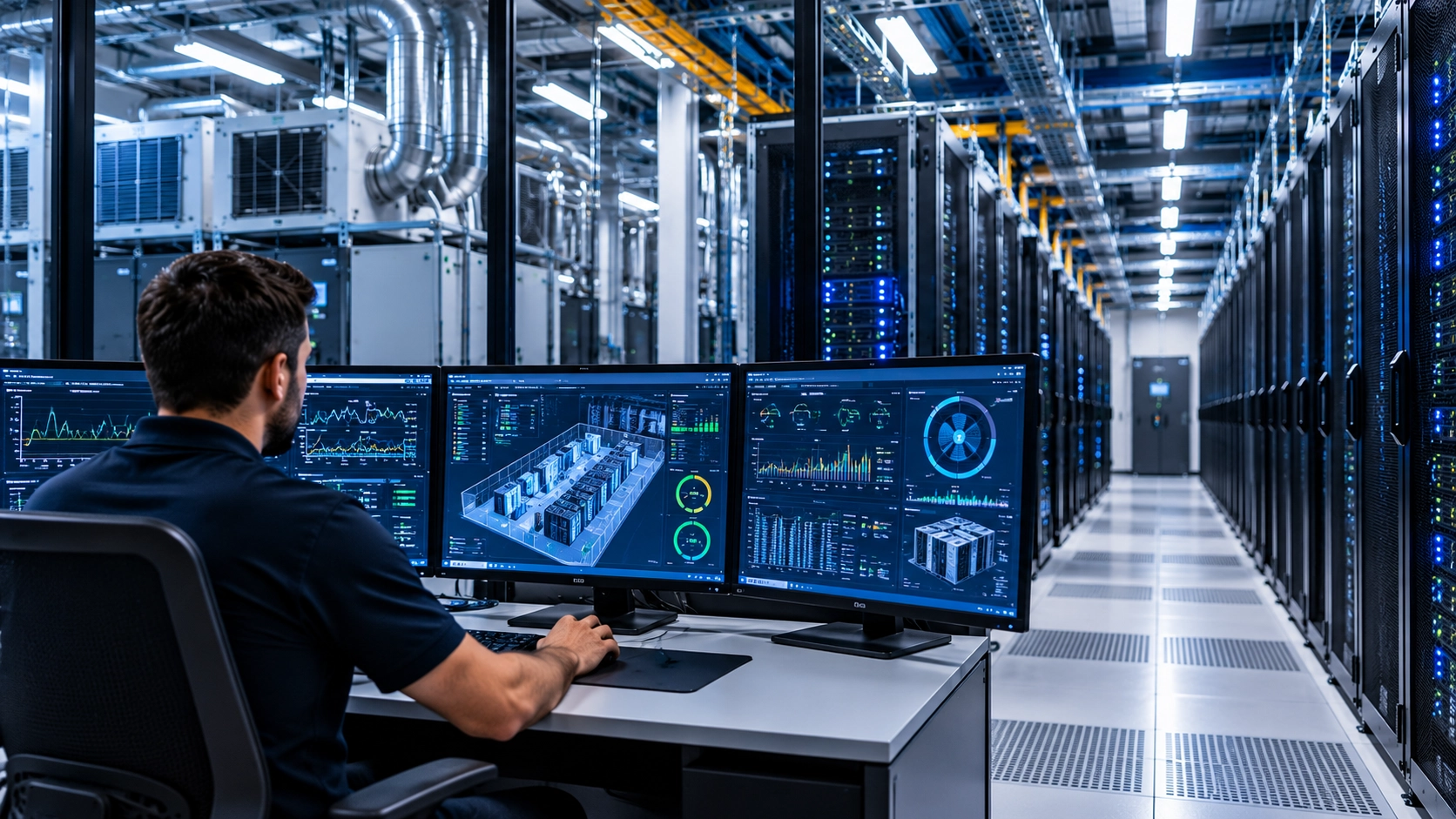
Data center monitoring provides visibility into the infrastructure and environmental conditions that support critical IT systems. Power, cooling, temperature, humidity, network connectivity and equipment conditions can all affect data center operations, making continuous visibility an important part of infrastructure management.
A modern data center can contain thousands of individual components operating across interconnected electrical, mechanical and IT environments. Monitoring helps facility and operations teams understand how these systems are performing, identify changes and respond when conditions move outside expected operating parameters.
The objective is not simply to collect more data. Effective monitoring focuses on measurements that provide useful operational information and helps teams understand how conditions at facility, room, row and rack level relate to the infrastructure being supported.
Crystal Peaks Data Centers incorporates monitoring into its wider data center infrastructure planning approach, where power, cooling, equipment density, environmental conditions and future capacity are considered together.
What Is Data Center Monitoring?
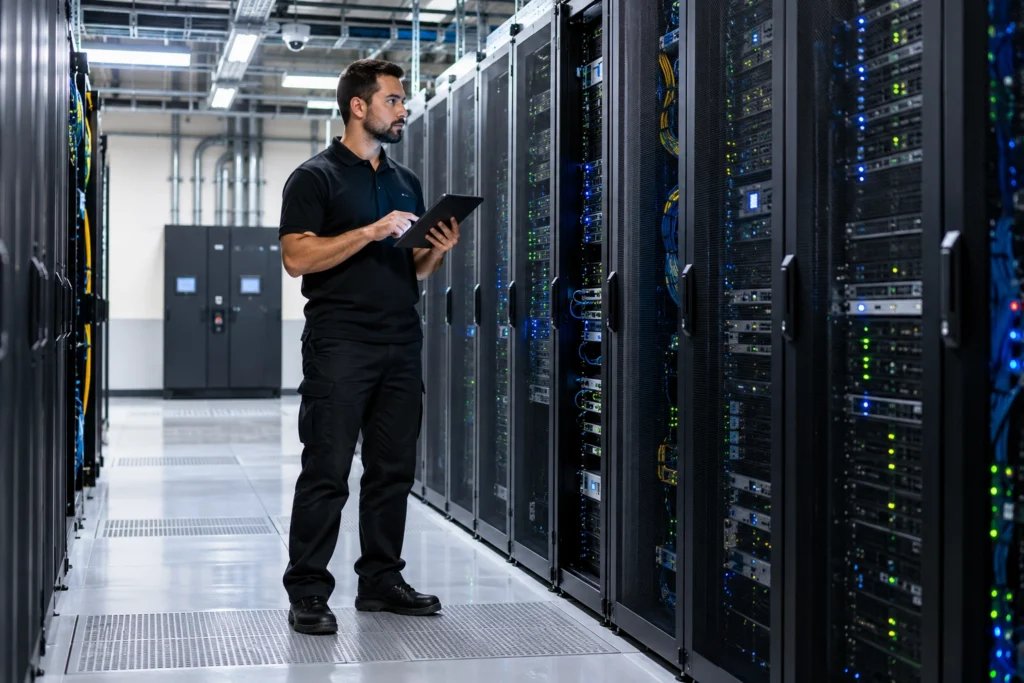
Data center monitoring is the process of observing and tracking conditions across IT equipment and the infrastructure that supports it. Depending on the facility, this can include electrical systems, cooling equipment, temperature and humidity, network connectivity, rack conditions and other operational measurements.
Monitoring systems collect information from sensors, meters, network devices and facility equipment. That information can then be presented through dashboards, alerts, reports or data center monitoring software so operators can understand what is happening within the environment.
This visibility is particularly useful because facility conditions are not always uniform. A building-level measurement may appear normal while a particular rack, electrical circuit or part of the cooling environment is approaching a limit.
Monitoring at appropriate levels therefore provides a more useful picture of actual operating conditions than relying only on broad facility totals.
Why Data Center Monitoring Matters
Data centers depend on multiple infrastructure systems operating together. Servers require electrical power, electrical equipment produces heat, cooling infrastructure removes that heat and network systems connect workloads to users and external services.
A change in one area can affect another. Increasing rack power can increase thermal demand, while a cooling issue can change equipment inlet temperatures even when the IT hardware itself is operating normally.
Monitoring provides visibility into these relationships. It can help teams identify abnormal conditions, investigate developing issues, understand infrastructure utilization and determine whether available capacity is approaching practical limits.
Historical monitoring data can also support longer-term planning by showing how power, environmental conditions and infrastructure utilization change over time.
What Should Be Monitored in a Data Center?
The measurements that matter depend on the facility architecture and workloads being supported. However, several infrastructure areas commonly form part of a broader monitoring strategy.
| Monitoring Area | What Can Be Tracked | Why It Matters |
|---|---|---|
| Power | Electrical load, circuit utilization, UPS status and power distribution | Provides visibility into electrical demand and available infrastructure capacity. |
| Temperature | Room, aisle and rack inlet conditions | Helps identify areas where equipment may be experiencing changing thermal conditions. |
| Humidity | Environmental humidity conditions | Provides additional visibility into the operating environment around IT equipment. |
| Cooling | Cooling equipment status, thermal conditions and relevant system measurements | Helps teams understand whether cooling infrastructure is supporting equipment loads. |
| Rack Conditions | Power demand, temperature and equipment density | Provides more granular information than facility-level measurements alone. |
| Network | Availability, bandwidth utilization and connectivity conditions | Helps identify network constraints or disruptions affecting workloads. |
| Facility Systems | Supporting electrical and mechanical equipment | Provides visibility into infrastructure that IT systems depend on. |
| Capacity | Resource utilization and historical demand | Helps identify trends and supports future infrastructure planning. |
1. Monitor Electrical Power and Utilization
Power is one of the fundamental resources within a data center. Monitoring electrical demand helps operators understand how much infrastructure is being used and where available capacity remains.
Useful measurements can exist at several levels, including facility distribution, individual circuits, power distribution equipment and racks.
This distinction is important because overall facility capacity does not necessarily indicate what is available at a particular rack. A data center can have unused electrical capacity while specific distribution paths or equipment areas are more heavily utilized.
Historical power monitoring can also support data center capacity planning by showing how demand changes as infrastructure grows.
2. Track Temperature at the Right Locations
Temperature is one of the most important environmental measurements within a data center, but sensor location can be just as important as the reading itself.
A single room-level sensor may not reveal localized thermal conditions around individual racks. Equipment density, airflow patterns and rack layout can create differences across a data hall.
Temperature monitoring closer to equipment can provide a clearer indication of the conditions servers actually experience.
ASHRAE publishes technical guidance covering environmental conditions for data processing equipment and data center thermal management. Additional technical information is available through the ASHRAE Datacom Series.
3. Monitor Humidity and Environmental Conditions
Temperature is not the only environmental condition relevant to IT infrastructure. Humidity can also form part of a facility’s environmental monitoring strategy.
Monitoring provides operators with visibility into changes rather than relying on occasional manual readings. Historical data can also help teams understand whether conditions remain stable across different operating loads and periods.
The appropriate environmental parameters and operating ranges depend on the equipment and facility design. Monitoring should therefore be aligned with the requirements of the infrastructure actually being supported.
4. Monitor Cooling Infrastructure
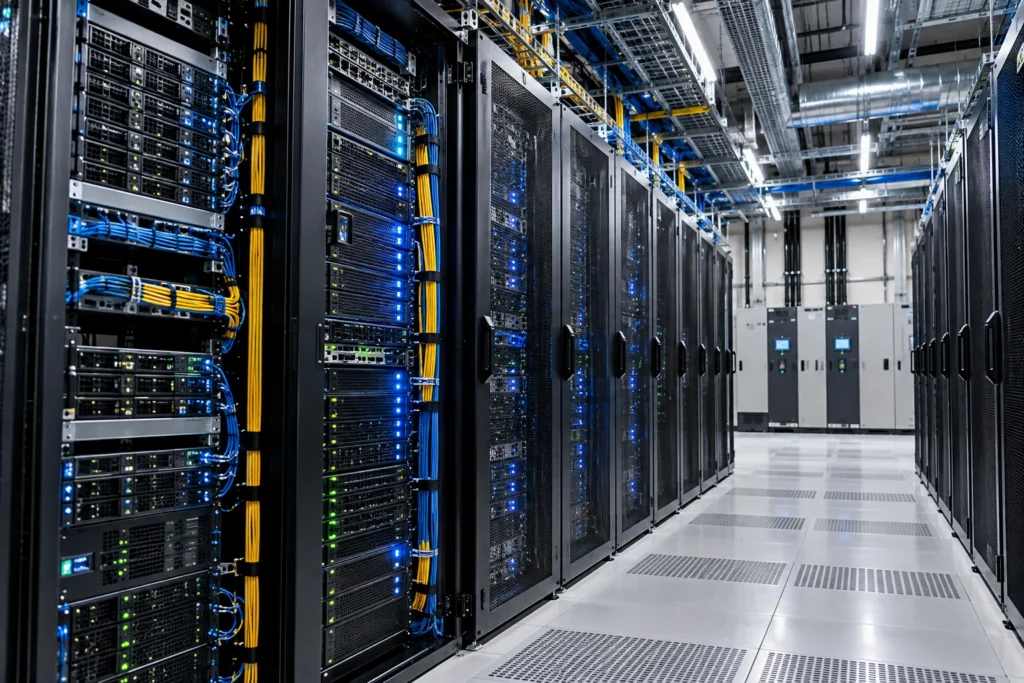
Cooling infrastructure needs to respond to the heat generated by IT equipment. Monitoring can provide visibility into both environmental conditions and the systems responsible for maintaining them.
The useful measurements depend on the cooling architecture, but the objective remains similar: understand whether the environment is operating as intended and identify changes that could affect equipment conditions.
Cooling monitoring becomes increasingly important as rack density rises. High-density equipment can create concentrated thermal loads that may not be obvious from broad room-level measurements.
Crystal Peaks considers monitoring alongside its wider data center cooling infrastructure, where cooling capacity, equipment density, environmental conditions and future requirements are connected.
5. Monitor at Rack Level Where Appropriate
Facility-wide monitoring provides useful context, but increasingly dense computing environments can make rack-level visibility particularly valuable.
Two racks in the same data hall can have substantially different power and thermal characteristics depending on the equipment installed within them.
Monitoring power demand and environmental conditions closer to the rack can help operators identify these differences and understand whether infrastructure resources are being distributed effectively.
This can also support capacity decisions by showing where additional equipment can realistically be installed rather than assuming all unused rack space has the same supporting infrastructure available.
6. Monitor Network Availability and Utilization
Network infrastructure is another important part of the data center environment. Servers can be operating normally while applications remain inaccessible because of connectivity problems elsewhere in the network path.
Network monitoring can provide information about device availability, bandwidth utilization and changing traffic conditions.
Historical utilization can also help identify when connectivity requirements are increasing and whether additional capacity may eventually be needed.
Monitoring network conditions alongside power, cooling and equipment utilization provides a broader view of the infrastructure supporting workloads.
7. Use Alerts to Identify Meaningful Changes
Collecting monitoring data has limited value if important changes are not surfaced to the people responsible for responding to them.
Alerts can be configured around relevant thresholds or equipment states so operators are notified when conditions require investigation.
Thresholds should be selected carefully. If alerts are too sensitive, teams can receive large numbers of notifications that provide little operational value. If thresholds are too broad, important changes may not be identified early enough.
The monitoring strategy should therefore focus on actionable information rather than generating the maximum possible number of alerts.
8. Use Historical Monitoring Data for Capacity Planning
Real-time monitoring helps teams understand current conditions, while historical data provides insight into how the environment changes over time.
Power demand, bandwidth utilization, storage requirements and environmental conditions can all develop patterns as workloads grow or equipment changes.
Reviewing these trends can help organizations identify infrastructure resources that are approaching planning thresholds before they become immediate constraints.
This makes monitoring useful not only for operations but also for long-term infrastructure decisions.
9. Connect Monitoring With Redundancy and Reliability
Redundant infrastructure is intended to provide resilience when equipment requires maintenance or experiences disruption. Monitoring helps operations teams understand the state of those supporting systems.
This is important because redundancy depends on more than equipment being physically installed. Teams need visibility into whether systems are available and operating as expected.
Monitoring can also provide useful information during maintenance by showing how remaining infrastructure responds when part of the environment is intentionally taken out of service.
The appropriate monitoring and redundancy strategy depends on facility design and workload requirements, but the two should be considered together as part of broader infrastructure planning.
10. Monitor for Future High-Density Workloads
AI, machine learning and high-performance computing are increasing the amount of computing power that can be concentrated within individual racks.
Higher density can increase both electrical and thermal demand, making granular monitoring increasingly useful for understanding actual rack conditions.
Organizations planning for these workloads should consider whether existing data center monitoring tools provide sufficient visibility at the locations where infrastructure conditions can vary most significantly.
This can include more detailed power and environmental monitoring around higher-density equipment rather than relying exclusively on facility-level measurements.
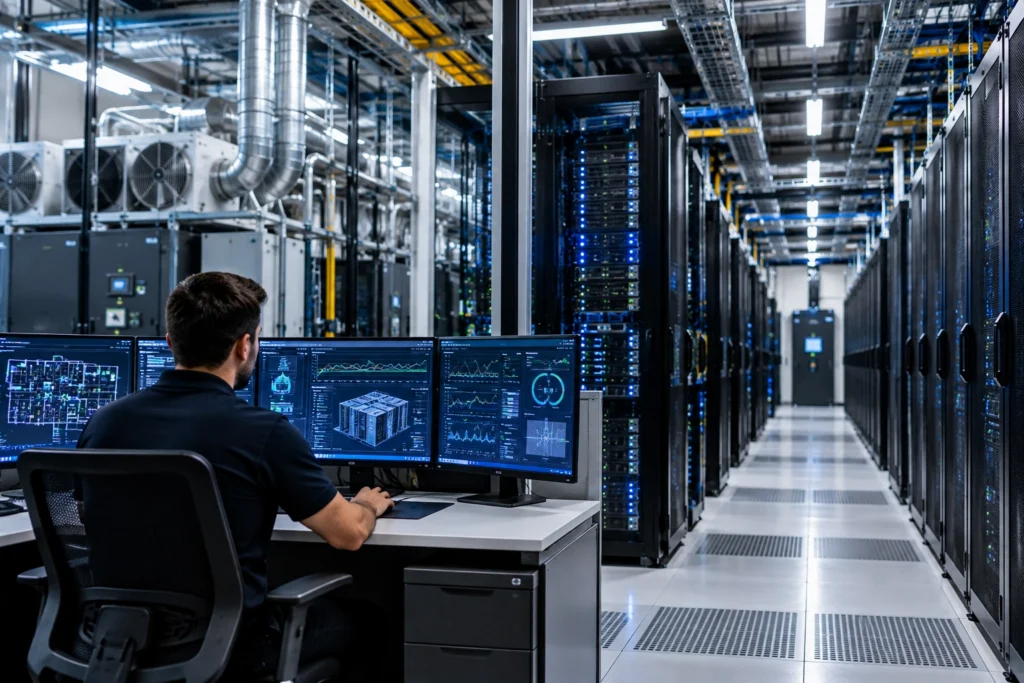
Data Center Monitoring Tools and Software
Data center monitoring tools can range from individual sensors and equipment interfaces to broader platforms that collect information from multiple infrastructure systems.
Data center monitoring software can help centralize information from these systems so operators can review conditions through dashboards, alerts, reports and historical trends.
Depending on the environment, monitoring may also connect with building management systems, network monitoring platforms or data center infrastructure management systems.
The appropriate approach depends on the size and complexity of the facility. The objective should be to provide useful visibility into the infrastructure that affects operations rather than introducing technology simply to increase the number of measurements being collected.
What to Look for in Data Center Monitoring Software
Organizations evaluating monitoring platforms should begin with the operational information they actually need rather than selecting software based only on the number of available features.
- Visibility into relevant power and environmental conditions
- Support for the sensors, meters and infrastructure equipment being used
- Configurable alerts and thresholds
- Historical reporting and trend analysis
- Appropriate rack-level or equipment-level visibility
- Clear dashboards for operational teams
- Integration with relevant facility or IT management systems
- Scalability as the infrastructure environment grows
The most useful platform is one that makes important infrastructure information easier to understand and act on.
Data Center Monitoring Checklist
A monitoring review should establish whether operators have sufficient visibility into the systems and conditions that can affect critical infrastructure.
- Is electrical demand monitored at appropriate infrastructure levels?
- Are temperature sensors positioned where they reflect equipment conditions?
- Are relevant humidity and environmental conditions monitored?
- Is cooling infrastructure status visible to operations teams?
- Can higher-density racks be monitored more granularly where required?
- Are network availability and utilization tracked?
- Are alerts configured around meaningful operating conditions?
- Can historical data be used to identify utilization trends?
- Is monitoring information available during maintenance and infrastructure changes?
- Can the monitoring environment scale as the data center grows?
Common Data Center Monitoring Mistakes
One common mistake is collecting large amounts of data without determining which measurements are operationally useful. More sensors do not automatically create better infrastructure visibility if the resulting information is difficult to interpret or act on.
Another issue is relying too heavily on facility-level measurements. Broad readings can hide localized power or thermal conditions around individual racks.
Sensor placement also matters. Environmental measurements taken far from equipment may not accurately represent the conditions experienced at server air intakes.
Finally, monitoring should evolve with the infrastructure. A monitoring strategy designed for lower-density equipment may need additional granularity when new high-density systems are introduced.
Monitoring as Part of Wider Data Center Operations
Monitoring works best when it forms part of a broader infrastructure strategy rather than operating as an isolated system.
Power measurements can inform capacity planning. Environmental monitoring can support cooling decisions. Network utilization can identify changing connectivity requirements, while historical trends can help teams understand how infrastructure demand develops over time.
This interconnected view is particularly valuable when planning new infrastructure or evaluating a data center colocation environment, where future power, cooling, rack and connectivity requirements should be considered alongside current needs.
Building Better Visibility Through Data Center Monitoring
Data center monitoring provides the operational visibility needed to understand how critical infrastructure is performing and how conditions change over time.
Power, cooling, temperature, humidity, network connectivity and rack conditions can all provide useful information when measurements are collected at appropriate locations and connected to meaningful alerts and operational processes.
Monitoring can also support longer-term infrastructure planning. Historical data provides evidence of how resource demand is changing and can help organizations identify potential constraints before they limit future deployments.
Crystal Peaks Data Centers incorporates monitoring into a wider infrastructure approach designed around controlled operating environments, power, cooling, equipment requirements and long-term capacity.
Learn more about Crystal Peaks’ data center infrastructure planning, explore its cooling infrastructure approach, or review data center services.
Frequently Asked Questions About Data Center Monitoring
What is data center monitoring?
Data center monitoring is the process of tracking conditions and infrastructure across a data center environment. This can include electrical power, temperature, humidity, cooling systems, network connectivity, rack conditions and supporting facility equipment.
What should be monitored in a data center?
Important monitoring areas can include power utilization, temperature, humidity, cooling infrastructure, rack conditions, network availability and supporting facility systems. The exact measurements should reflect the design of the facility and the requirements of the equipment being supported.
What are data center monitoring tools?
Data center monitoring tools include sensors, meters, equipment interfaces and software platforms used to collect and present information about infrastructure and environmental conditions.
What does data center monitoring software do?
Data center monitoring software can centralize information from infrastructure systems and present it through dashboards, alerts, reports and historical trends. The specific capabilities depend on the platform and systems being monitored.
Why is rack-level monitoring important?
Rack-level monitoring can provide more detailed information about power and environmental conditions than facility-wide measurements alone. This becomes particularly useful when different racks have substantially different equipment densities.
How does data center monitoring help with capacity planning?
Historical monitoring data can show how infrastructure utilization changes over time. Trends in power, network demand and other resources can help organizations identify where capacity may become constrained and plan future expansion accordingly.