
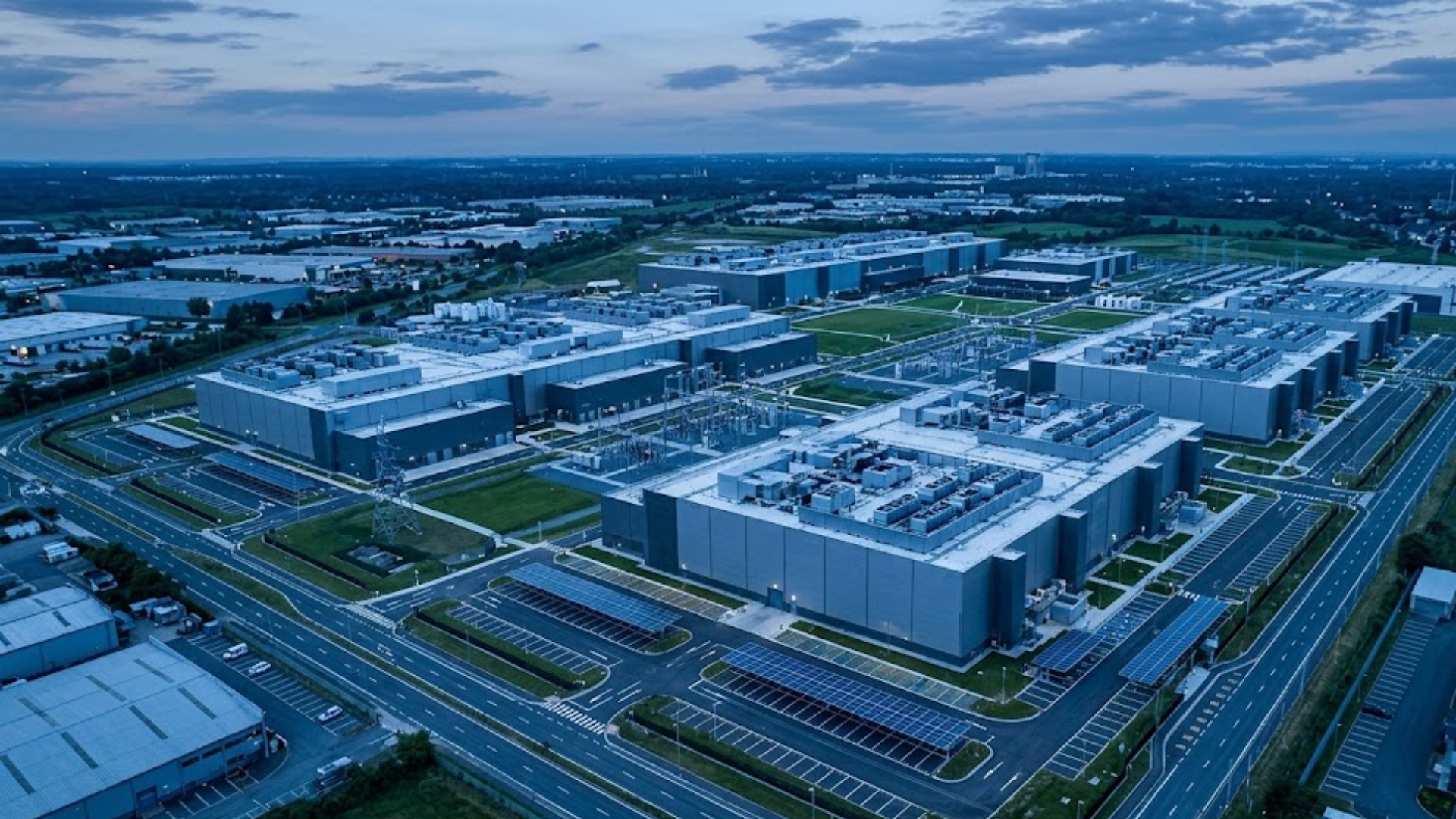
Digital demand continues to grow as businesses rely on cloud platforms, connected services, large data volumes, and highly available applications. In that environment, a hyperscale data center has become an important concept because it is designed to support very large computing environments with efficiency, consistency, and room for expansion.
That matters because infrastructure decisions can affect performance, resilience, and future planning more directly than before. Understanding how hyperscale facilities differ from traditional environments helps businesses make better sense of the broader infrastructure landscape without assuming that every large facility serves the same purpose.
What is a hyperscale data center?
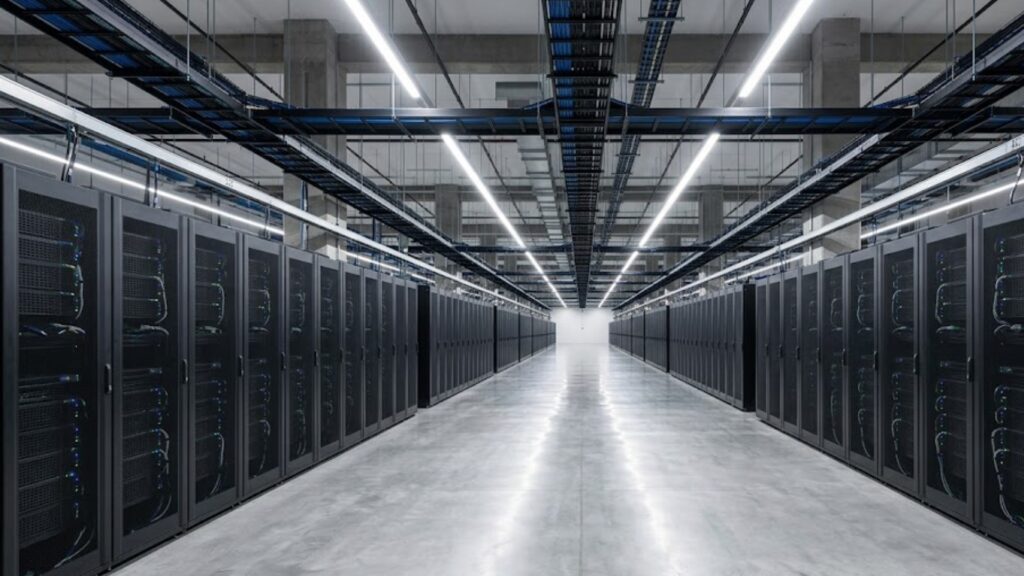
A hyperscale data center is a large-scale facility designed to support significant computing, storage, and networking demand. It is typically built using standardized infrastructure models that can make it easier to add capacity in a repeatable and organized way.
These facilities are often associated with large digital platforms, cloud environments, and businesses that need to support substantial workload growth. The focus is not only on size, but also on how efficiently that size can be expanded and operated over time.
How is it different from a traditional data center?
A traditional data center may support enterprise operations effectively, but it is often designed around smaller-scale demand or slower expansion cycles. A hyperscale data center is usually planned with larger growth expectations in mind, using more modular and repeatable infrastructure patterns.
The difference also extends to operations. Hyperscale environments often place stronger emphasis on automation, consistency, and the ability to scale without redesigning major parts of the facility each time additional demand appears.
Why has hyperscale growth become more important?
More businesses now depend on data-heavy applications, cloud-based tools, streaming services, artificial intelligence workloads, and connected digital platforms. That broader shift has increased the need for infrastructure that can support much larger and more variable demand.
As a result, hyperscale development has become more relevant in infrastructure planning conversations. It reflects the reality that digital growth is no longer limited to a few specialist sectors, but affects a wide range of industries and services.
What design features support hyperscale operations?
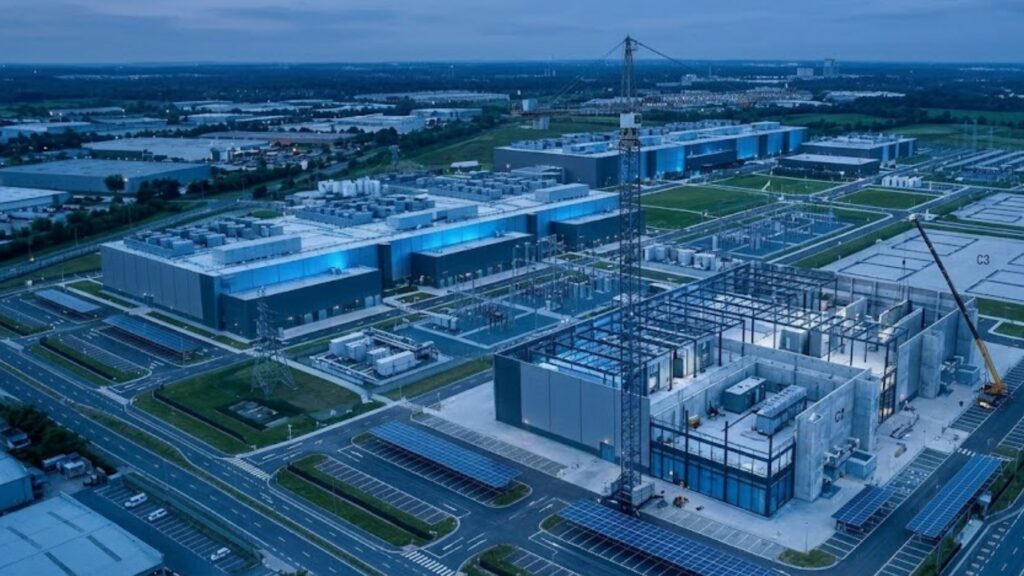
Hyperscale facilities are commonly built around modular layouts, dense compute environments, scalable utility systems, and strong network connectivity. These features can allow capacity to be added in phases while keeping the overall design more consistent and manageable.
Operational visibility also plays an important role. Monitoring, automation, and standardized deployment models can help teams manage larger environments with better control and fewer manual bottlenecks. Businesses exploring broader infrastructure capabilities often review available services to better understand how facility strategy fits into long-term planning.
How do power and cooling affect hyperscale facilities?
Power and cooling are central to hyperscale design because large computing environments place significant pressure on electrical and thermal systems. If these foundations are not planned properly, performance, efficiency, and operational reliability can all be affected.
That is why hyperscale facilities tend to place strong emphasis on utility planning, redundancy, and efficient heat management. As density increases, the ability to maintain stable operating conditions becomes even more important.

Who typically benefits from hyperscale environments?
Large cloud providers, digital service platforms, and organizations with substantial workload growth are the most obvious users of hyperscale environments. These facilities are often suited to operations that need significant scale, strong connectivity, and the ability to expand in a structured way.
Other businesses may benefit indirectly by relying on platforms or providers supported by this kind of infrastructure. Even when a company does not operate such a facility itself, hyperscale development can still influence the services and digital environments it depends on.
What challenges come with hyperscale development?
Large-scale development brings its own set of planning challenges. Power availability, connectivity, land, environmental considerations, and long-term expansion potential can all influence whether a site is practical for hyperscale use.
Operational complexity is another factor. As facilities grow in scale, managing density, reliability, phased expansion, and maintenance discipline becomes more demanding and requires careful coordination across multiple areas.
How do scalability and flexibility fit into hyperscale planning?
Scalability is one of the defining features of a hyperscale model. The environment is designed so that additional capacity can be introduced more efficiently, without needing to rebuild the facility approach from scratch each time growth occurs.
Flexibility matters alongside scale because demand does not always grow in a perfectly predictable way. Businesses evaluating future infrastructure direction often look at geography, connectivity, and long-term suitability, which is why the right locations can become an important part of the discussion.
How can businesses compare hyperscale considerations?
The most useful comparisons usually involve scale potential, utility access, connectivity, resilience design, and operational consistency. These factors can help decision-makers understand whether an environment is suited to long-term demand rather than only immediate needs.
A structured comparison also helps separate general interest from practical fit. That keeps planning grounded in real infrastructure requirements rather than broad assumptions about scale alone.
| Evaluation area | Why it matters | Common planning focus |
|---|---|---|
| Power access | Can support long-term growth | Reliable utility capacity |
| Connectivity | Affects performance and reach | Carrier diversity and network strength |
| Site flexibility | Can support phased expansion | Room for future development |
| Operations | Influences consistency | Standardized deployment and monitoring |
| Resilience | Can reduce disruption risk | Redundant critical systems |
For broader context, this external overview of hyperscale computing helps explain how large-scale digital infrastructure developed and why it matters.
What practical checklist should guide evaluation?
A practical evaluation starts with a few clear questions. How quickly is demand growing, which workloads are most important, how much flexibility may be needed in future, and what infrastructure dependencies matter most for long-term planning?
From there, teams can work through a simple checklist. Review forecast growth, compare current capacity limits, assess power and connectivity priorities, examine resilience expectations, and consider site suitability over time. Businesses looking for broader background can also explore expertise, learn more about us, or follow additional industry insight on the blog.